Architecture · Artist Residency · Joshua Tree, CA
Monument House
On living inside a building designed to make you look
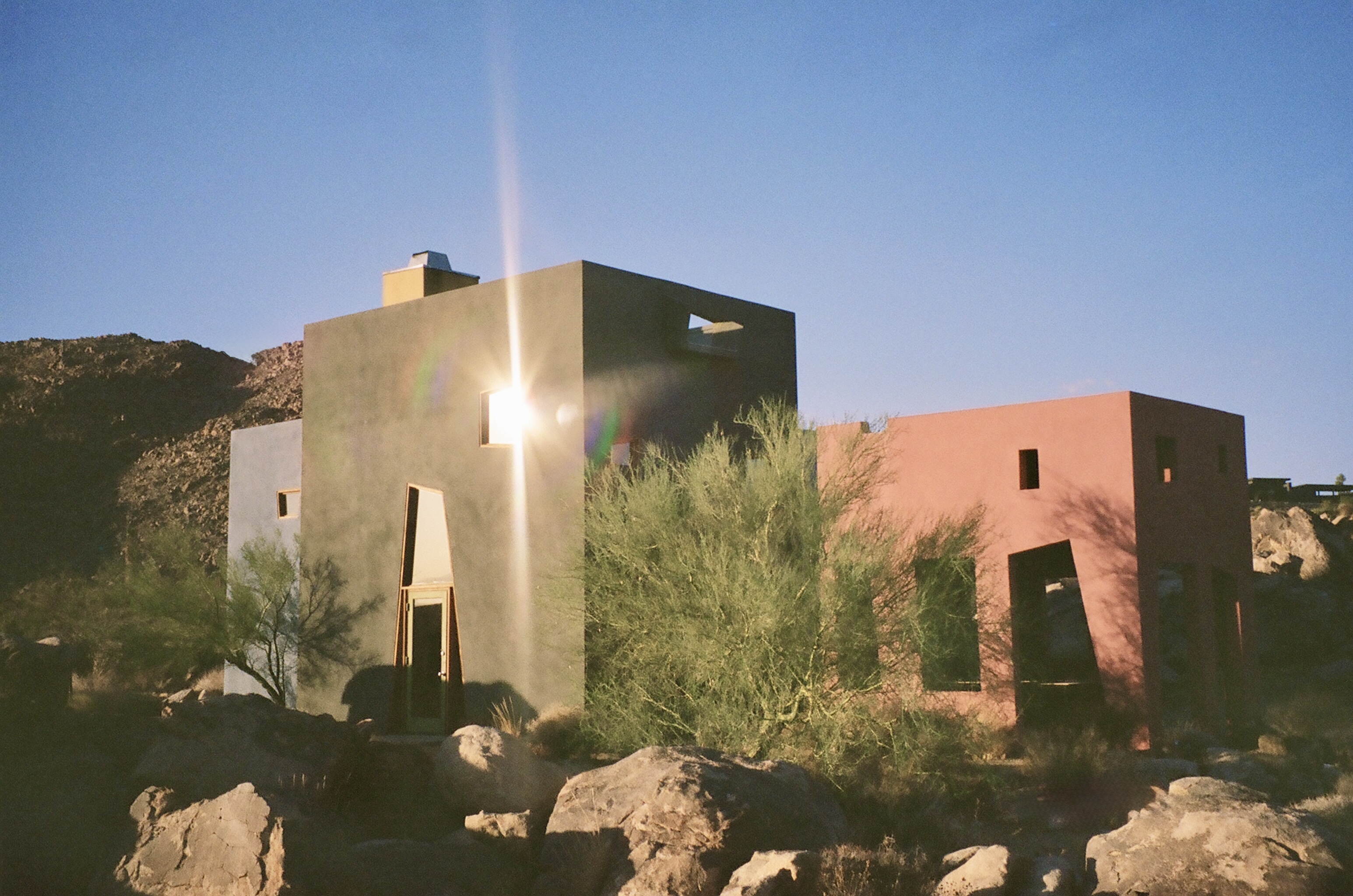
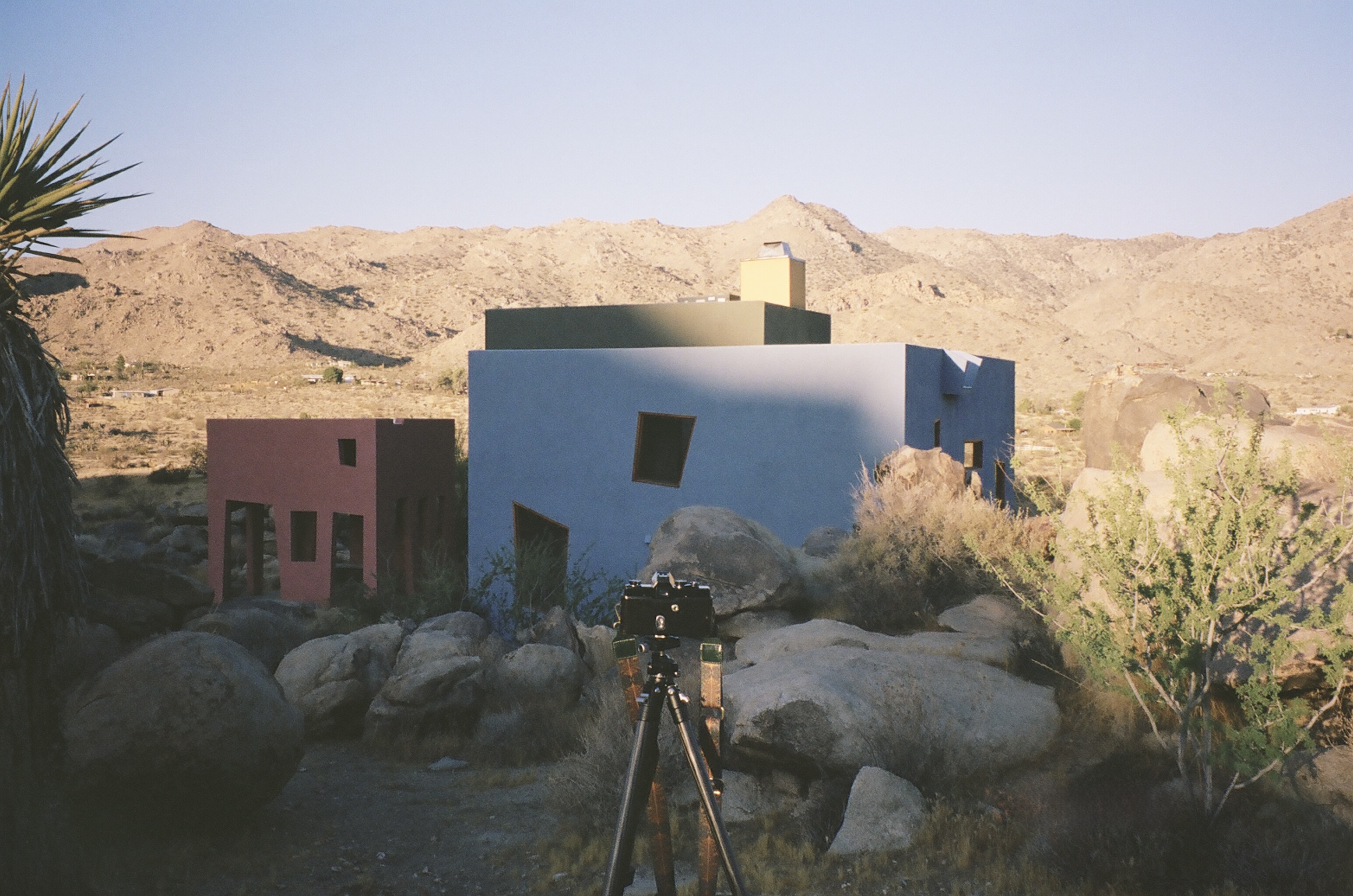
Monument House announces itself before you're ready for it. You come around a bend in the desert and there it is, a cluster of geometric volumes in terracotta, sage, and gray, sitting inside a boulder field as though it has always been there and always will be. The light was doing something strange the afternoon I arrived. It shot straight through a window opening in the gray volume like a beam, like a declaration. I stood outside for a long time before I went in. I needed a moment with what the building was already doing to the sky.
Josh Schweitzer designed Monument House to make you pay attention. Not the way a beautiful room makes you pay attention, quietly, pleasurably, but the way a question does. Every opening is shaped to frame something specific. The trapezoidal front door doesn't just let you in; it frames the boulder field beyond like a painting you walk through. I came as a documentarian. The building immediately turned that on me. It was doing what I do, selecting, framing, choosing what deserves to be seen.
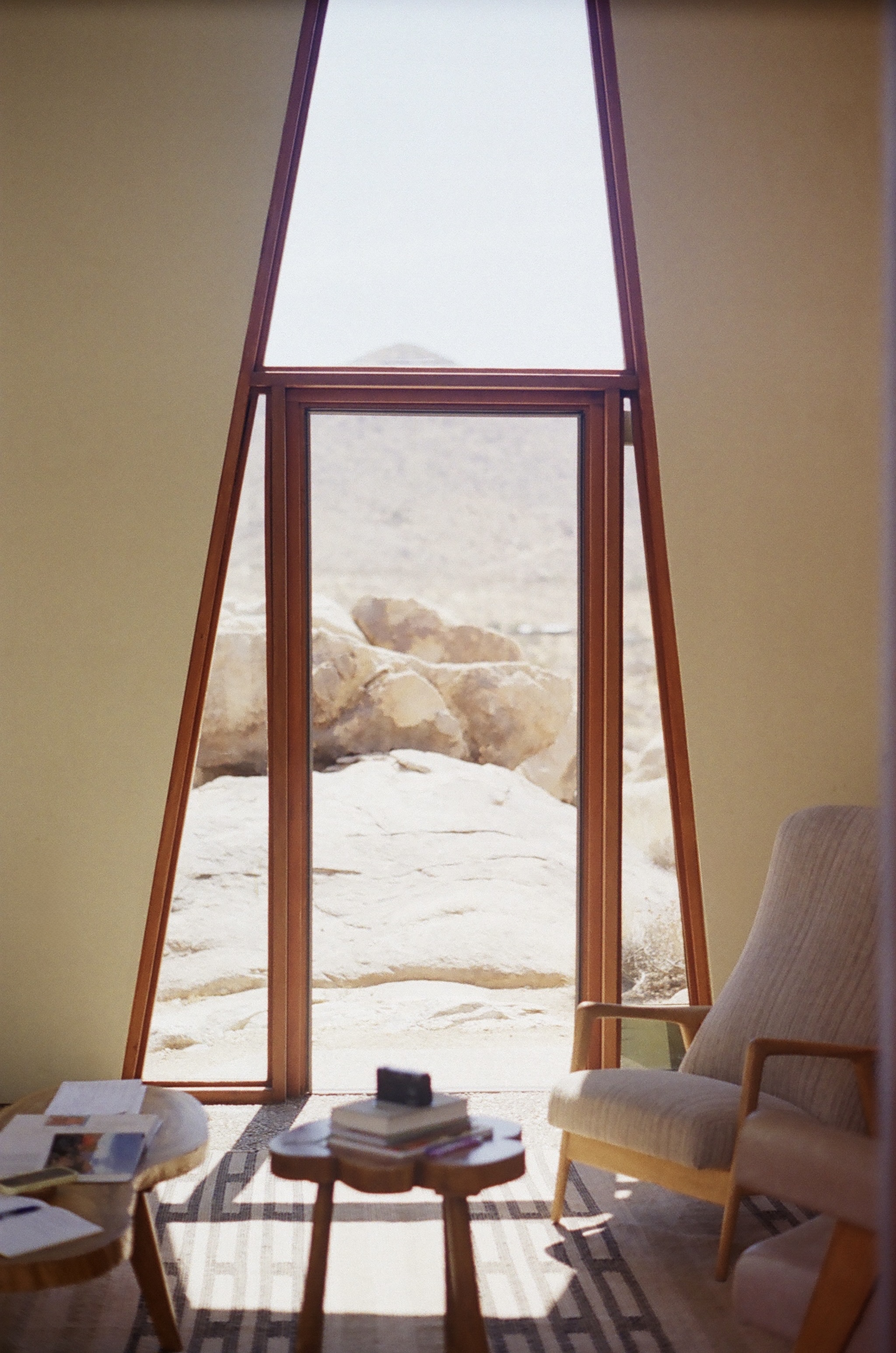
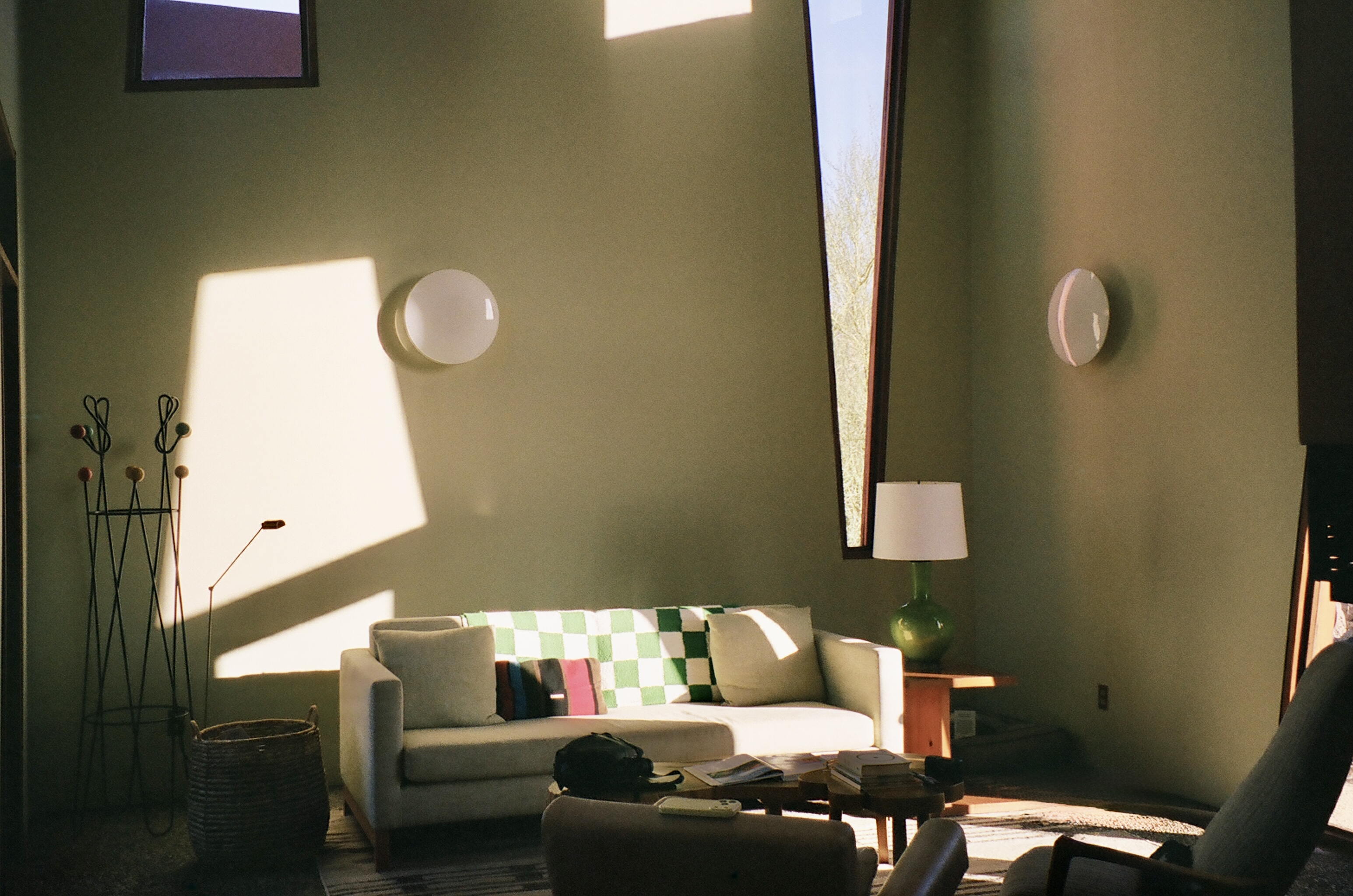
There is a difference between photographing a building and living inside one. I have photographed many buildings. I arrived at Casa Gilardi as a visitor. I walked through the Lou Ruvo Center as someone passing through. Monument House was the first building I have slept inside, woken up inside, made coffee inside, sat still inside long enough for it to reveal what it actually does. What it does is change the way you see light. The parallelogram of afternoon sun on the sage green wall in the living room is not an accident. It moves slowly across the surface as the hours pass, and if you are paying attention, really paying attention, you can watch the room become something different between morning and late afternoon without a single thing changing.
I brought two cameras, the Minolta and the Pentax, and a roll of 35mm. I set it up on a tripod in the main room on the first morning and sat with it for a while without shooting. I was trying to figure out what the building wanted me to photograph. Most documentary work begins with a subject. This began with a question about whether I was the subject or the architecture was, and whether that distinction even mattered.
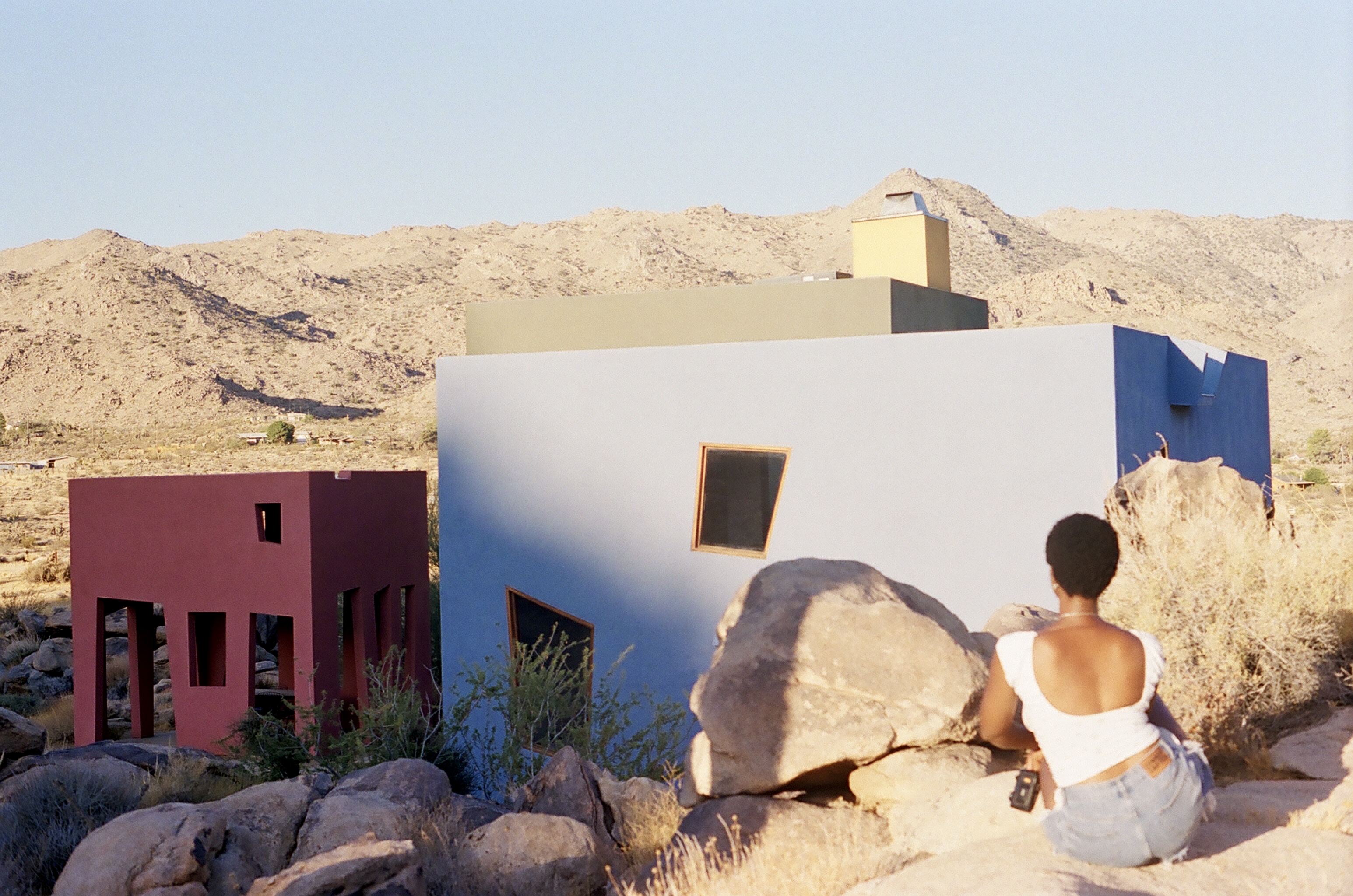
I made self-portraits. This is not something I came planning to do. But Monument House creates the conditions for it, you are always inside a frame there, whether you intend to be or not. I sat on a boulder outside the terracotta volume with my back to the camera, looking at the color field in front of me: the pink volume against the blue desert sky and the mountains beyond. I pressed the shutter from a distance. The camera saw what I was looking at. That felt like the truest documentary image I made there, a photograph of someone in the act of looking, which is what I always hope my work becomes.
On the last morning I went outside before the sun was all the way up and stood under the cutout openings in the gray volume and looked straight up. The sky came through in rectangles. Boulders on two sides. The geometry overhead was exact and the light was still cool and for a moment the architecture felt less like a building and more like an instrument, something tuned specifically to catch what was happening in the air around it. I held that feeling in my chest on the drive back. I still have it.
Documentary work asks you to show up without knowing what you'll find. Monument House gave me more than I came looking for. It gave me an education in framing, not the kind you learn from a camera, but the kind that happens when a building insists you look at something and you finally, fully, do.
Further Reading
- Homestead Modern: the curatorial rental collective that stewards Monument House and other significant desert properties
- Monument House · film viewer: photographs from this stay, on 35mm and medium format film