Documentary Essay · Architecture · Los Angeles
Sister Dreamer: Lauren Halsey's Architectural Ode To Tha Surge N Splurge Of South Central
On Lauren Halsey's Sister Dreamer, the frequency of 23, and what it means to mother and document in the same breath
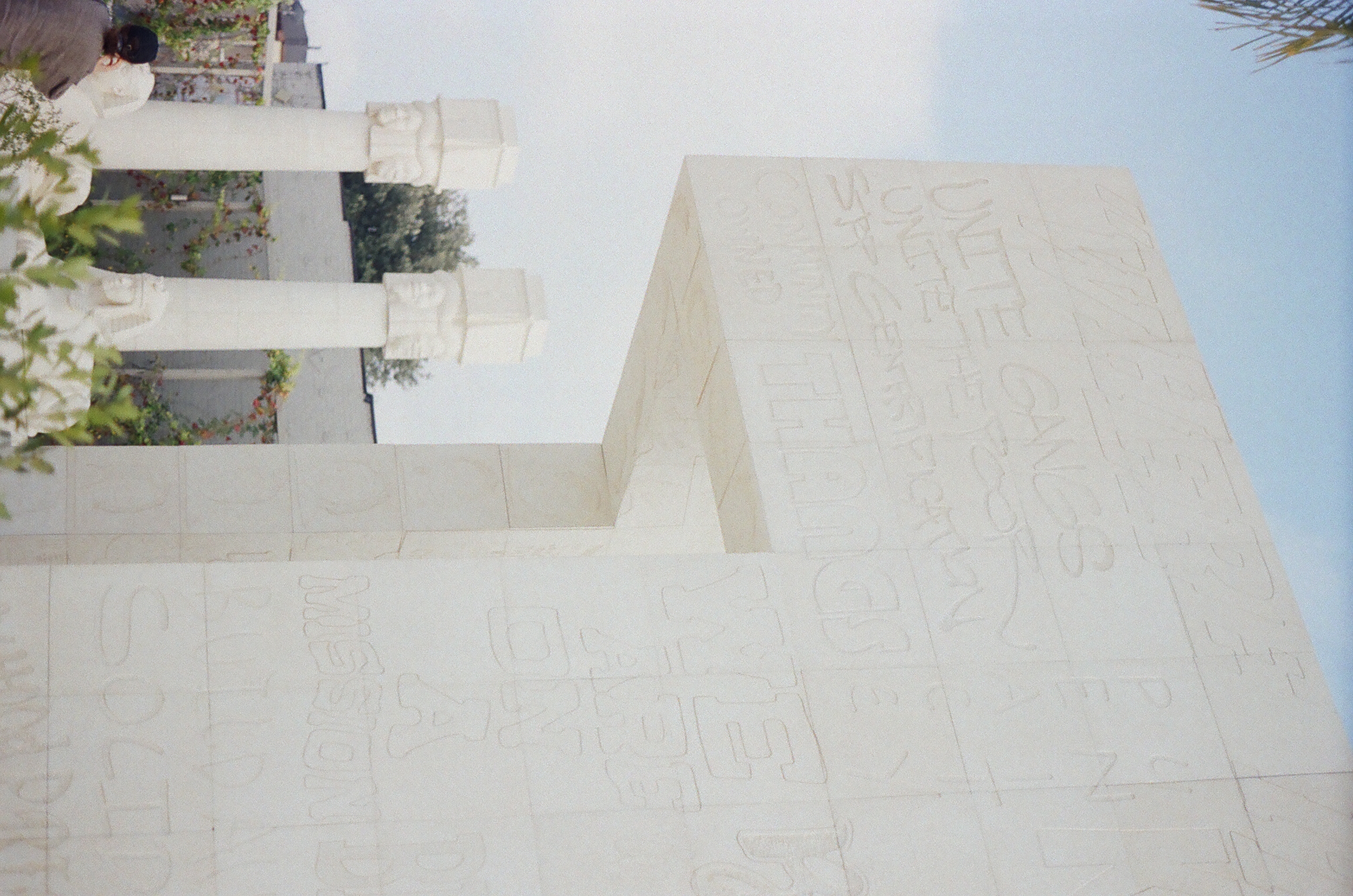
We drove into Los Angeles the night before. May 23rd was dedicated entirely to Sister Dreamer, I had decided that quietly, intentionally, the way I make most of the decisions that matter to me. For two and a half months, I had been visualizing this. I had watched the grand opening happen in March from a distance, on Instagram, and fallen in love with all of it: the art, the history, the community, the architecture, the sheer audacity of what Lauren Halsey had built in the middle of South Central. Something in me knew, even then, that I was being drawn toward it. I just didn't yet know what the universe was arranging on the other end of that pull.
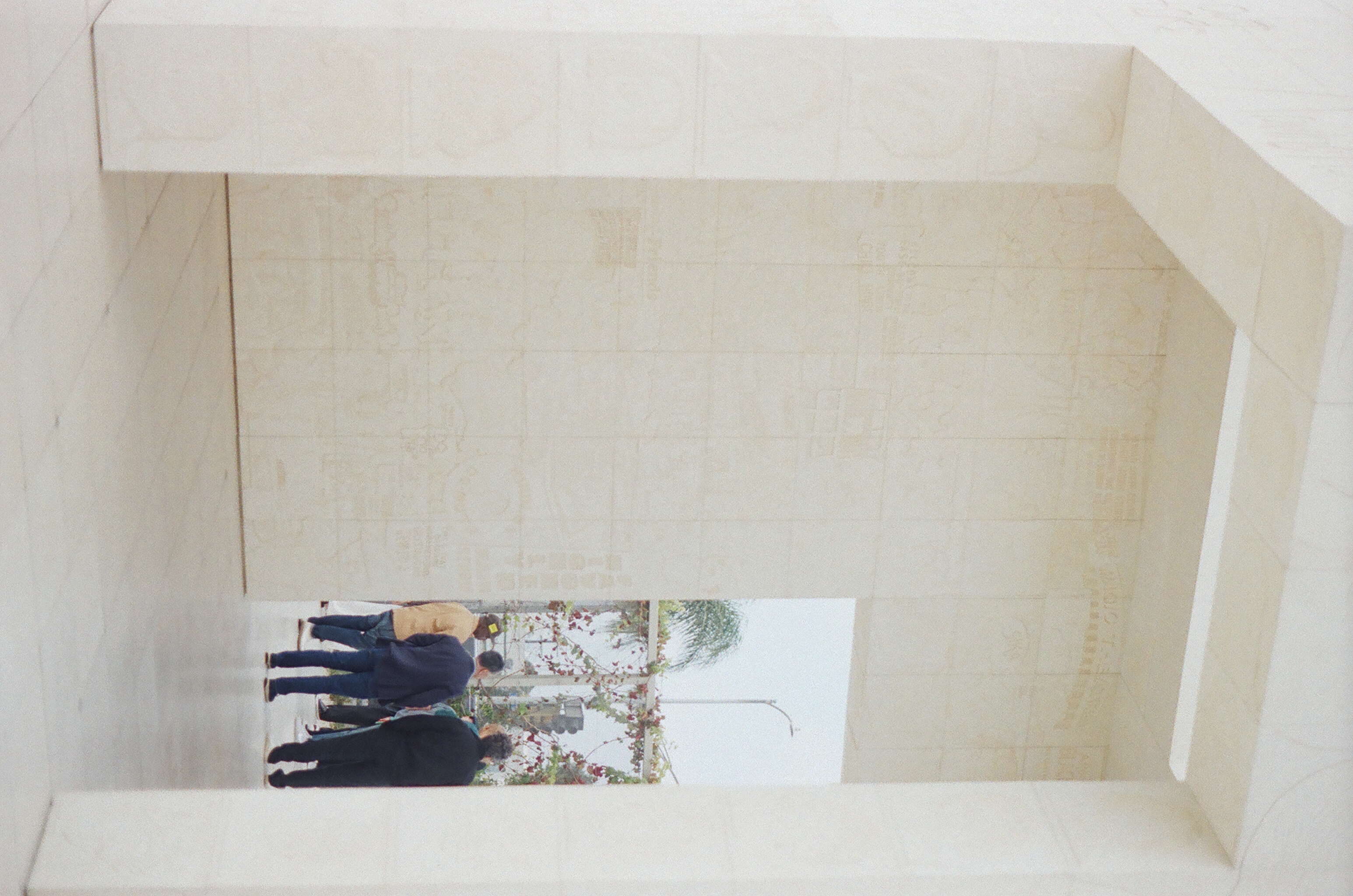
Sister Dreamer is Lauren Halsey's architectural monument to tha surge n splurge of South Central Los Angeles, carved stone, gilded surface, and the names of businesses, songs, phone numbers, and people that defined a neighborhood across decades. Robin Daniels. Rosie Lee Hooks. Margaret Prescod. Patrice Rushen. Beauty supply stores and block institutions. The ordinary sacred made permanent in stone. Black culture, Black history, Black community, encoded into walls designed to last. Halsey understood that this archive wasn't being built anywhere else. So she built it herself. That is what it looks like to refuse erasure.
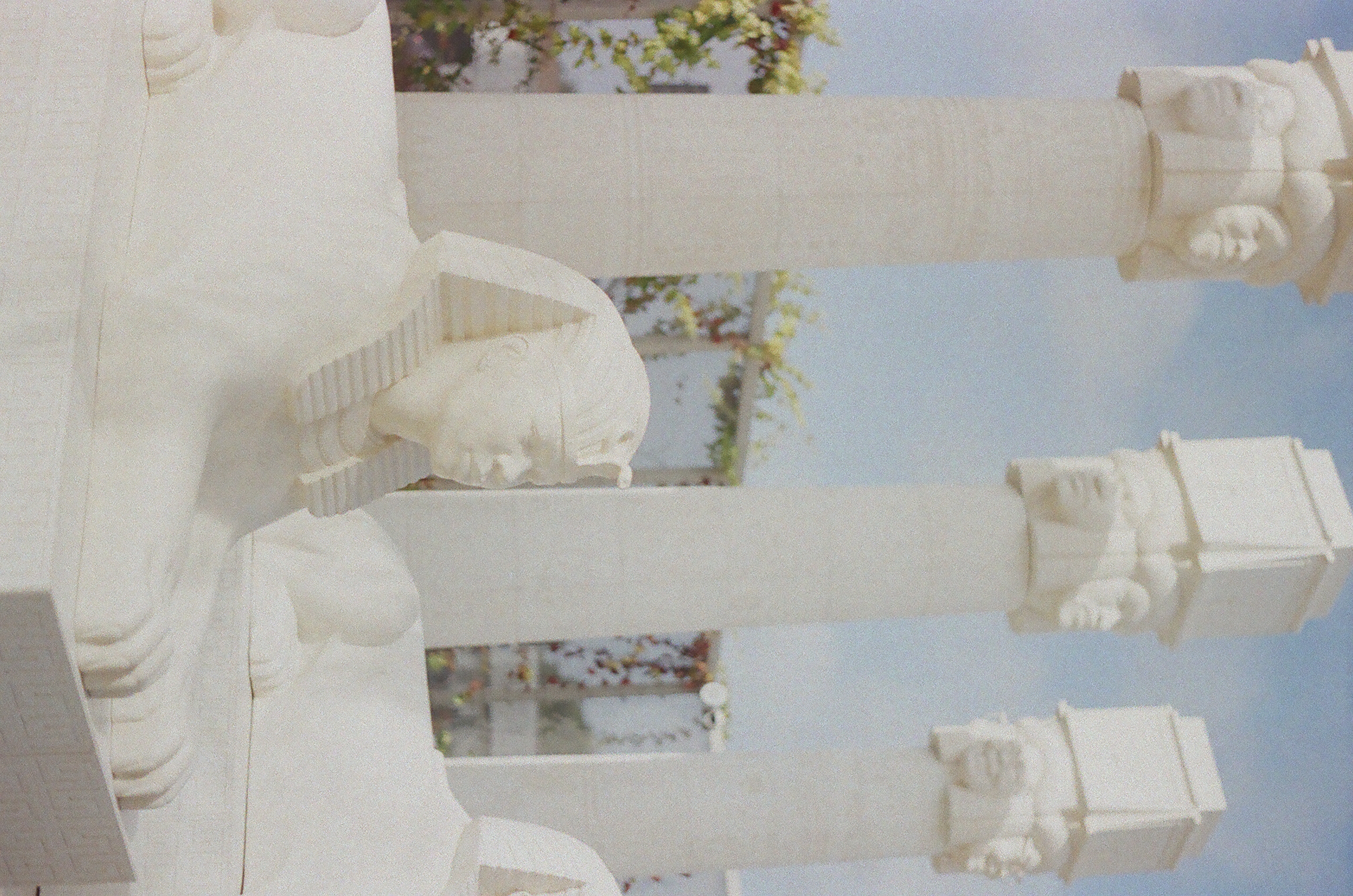
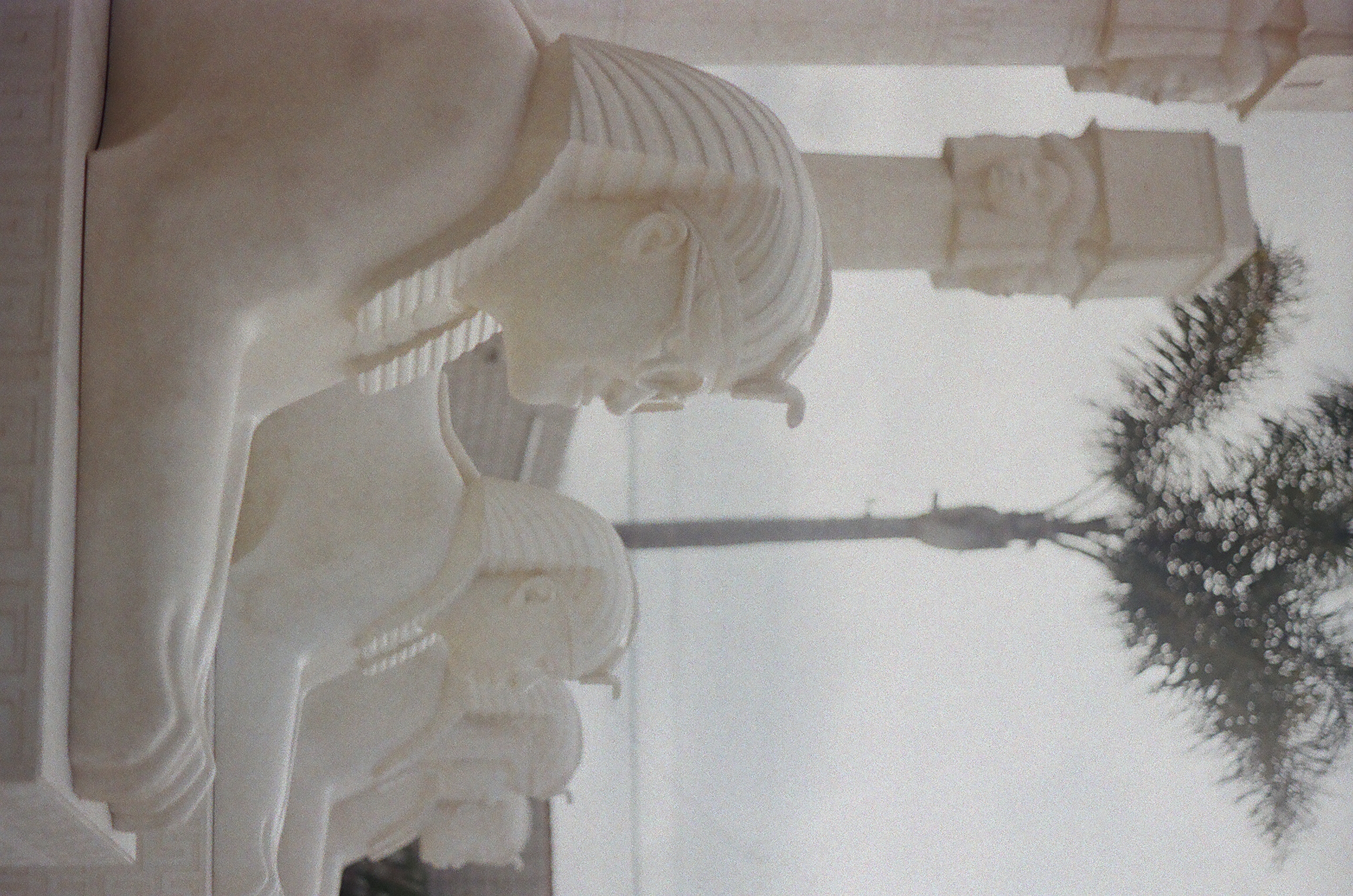
Black history is foundational to the fabric of this country, and places like South Central carry so much of what history moves past without looking back. What gets lost. What goes undocumented. What disappears between one generation and the next if no one chooses to hold it. My entire practice is built around that choice, around witnessing and preserving the things that others overlook, in spaces that deserve to be seen. Standing inside Sister Dreamer felt like a mirror. I am deeply moved by Black artists who stand firm in their calling, who claim ownership over their art and their space and what they put into this world. That kind of commitment is not only inspiring. It is a reflection. I saw myself in this work, not in vanity, but in recognition.
I shoot on 35mm film because it asks the same things of me that this era of my life has been asking: presence. patience. intentionality. You cannot fake your way through a roll of film. You cannot go back and delete what didn't come out right. You see what is in front of you, you trust your instincts, you press the shutter, and you wait. That discipline has shaped how I move through the world, slowly, deliberately, with vision and reality held in the same hand. I had visualized this day for two and a half months. I missed the grand opening and trusted that the timing would still be right. Film photography has taught me that the right moment does not always arrive when you expect it. It arrives when you are prepared to receive it.
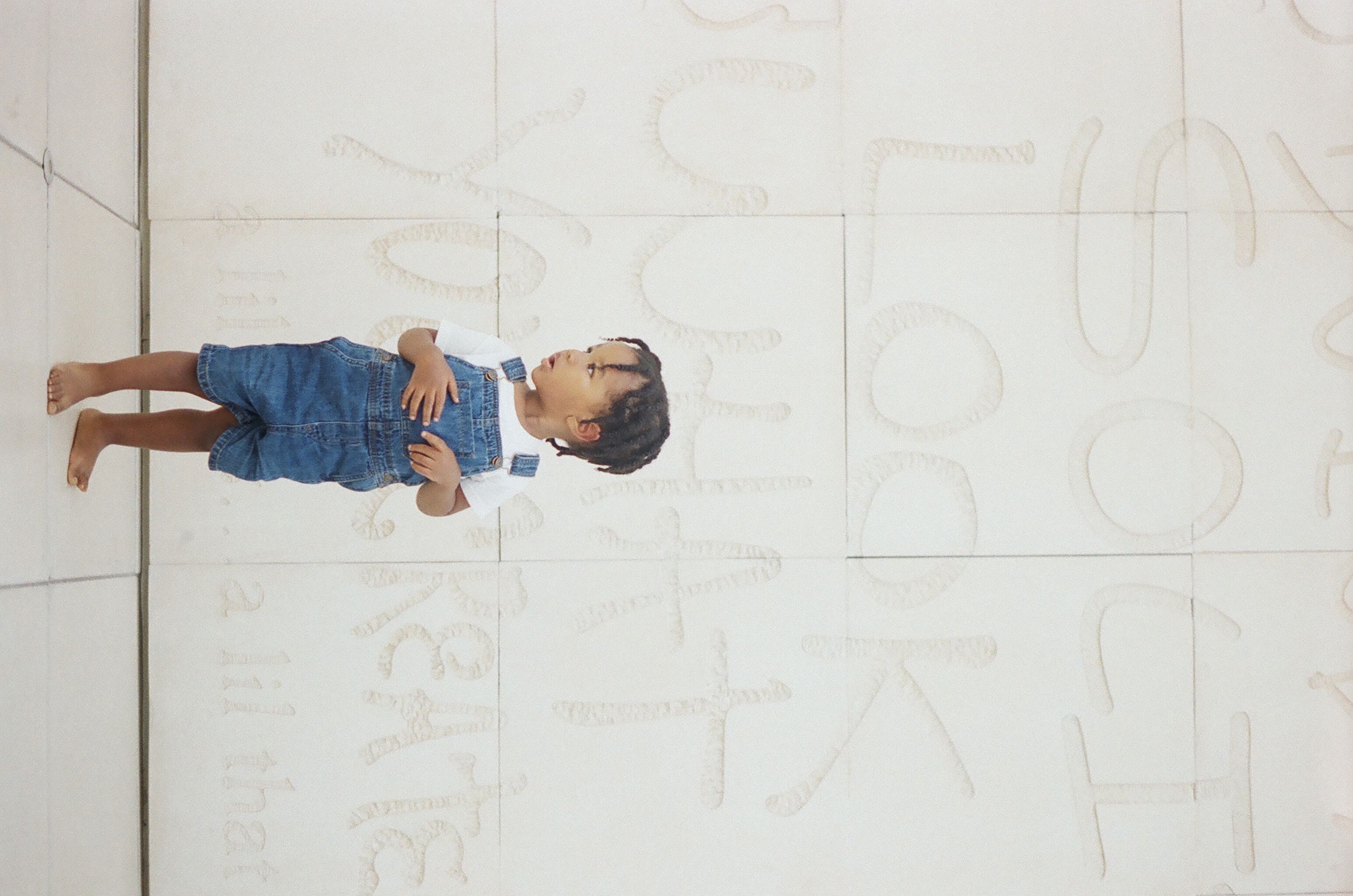
The installation also houses programs, STEM education, free services, community resources, a living space for the people Halsey grew up around. It is not a monument you observe from a distance. It is one you walk into. Azulu walked into it. He ran his fingers along the carved walls. He stood barefoot in his overalls in front of the wall that reads LOOK WHAT YOU CREATE, not knowing he was standing inside a thesis about belonging and memory and the refusal to be erased. He is two years old. He will not remember being here. But I brought him here intentionally, because it matters that he is immersed in spaces built by people who look like us, for people who look like us, before he even has the language to understand what that means. These are the spaces that shape a child's sense of what is possible. I wanted him inside this one.
I had been there for at least thirty minutes. I was immersed, shooting, watching, recording, feeling the weight of the space settle into me the way film grain settles into shadow. Azulu was with me the way he always is: present, curious, unbothered by the significance of things. And then I looked up.
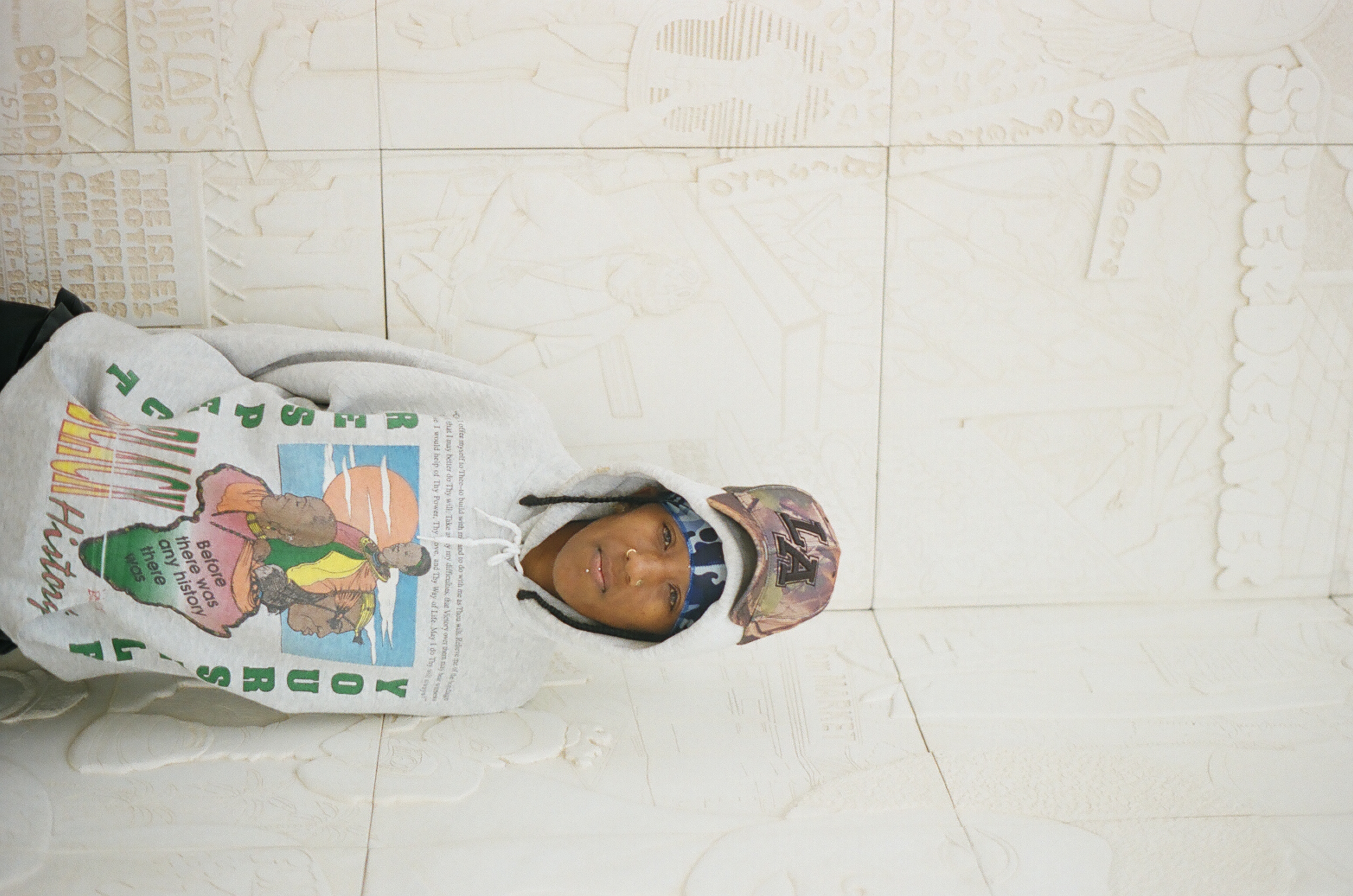
There she was. Lauren Halsey. Standing among a small, intimate group, scholars, art enthusiasts, and Azulu and I. Something in me registered the date before I registered her face. May 23rd. My son and I are both born on February 23rd. Something about the 23rd always arrives on a different frequency, a particular vibration, a specific alignment. The visualization had become real. She spoke for over thirty minutes. Her passion, her truth, her full ownership of this space and this work and this neighborhood's right to be honored. I listened. I recorded her on my iPhone. And then, quietly and clearly, it dawned on me, the way the right decisions always come to me: introduce yourself. Ask to photograph her on film.
"I shared with her that my son and I had driven from Las Vegas specifically for Sister Dreamer. That I am a documentarian. That I shoot on film. She said yes."
She said yes.
I photographed her on my Minolta SRT-101. On 35mm film. Standing against the wall she carved, with the words SISTER DREAMER etched in stone above her head, wearing a hoodie that read Respect Yourself / Black History. She is the work. The archive of South Central surrounds her, the names, the songs, the faces, and she is standing inside all of it. Completely still, completely present. A monument inside a monument.
I didn't plan for Lauren Halsey to be there that day. I just showed up prepared. Two and a half months of visualization. A day dedicated entirely to this space. A camera loaded with film. My son in my arms. That is what preparation looks like, not a guarantee, but a readiness. And the universe, when it finds you ready, tends to show up. I have come to understand this more fully in recent years: that I can move through the world as Tatiana and as a mother at the same time. That these things do not compete with each other. They compound. The intentionality of my practice, the patience of film, the presence that motherhood demands, all of it brought me to a May afternoon in South Central, standing in front of Lauren Halsey with my camera, on a day that began in Topanga Canyon and ended inside a monument. I do not call that coincidence. I call it alignment. I call it what happens when you stay the course long enough for the moment to find you.
Most people experienced Sister Dreamer at its launch in March. Mine arrived on May 23rd. I don't call that late. I call it exactly on time.
This visit would echo a month later, one city over, read what it led to in The Art of Sister(hood).
Sources & Context
- Lauren Halsey at MOCA: the artist at The Museum of Contemporary Art, Los Angeles
- Watts Towers Arts Center: cultural and educational campus adjacent to the Watts Towers, seven miles south
- Sister Dreamer · film viewer: photographs from this visit, on 35mm film
- He Doesn't Know He's in the Frame: on what Azulu brought to this same afternoon