Architecture · Frank Gehry · Las Vegas, NV
A Study in Light and Stillness
On Frank Gehry's Lou Ruvo Center for Brain Health, and learning to see what you've passed a hundred times
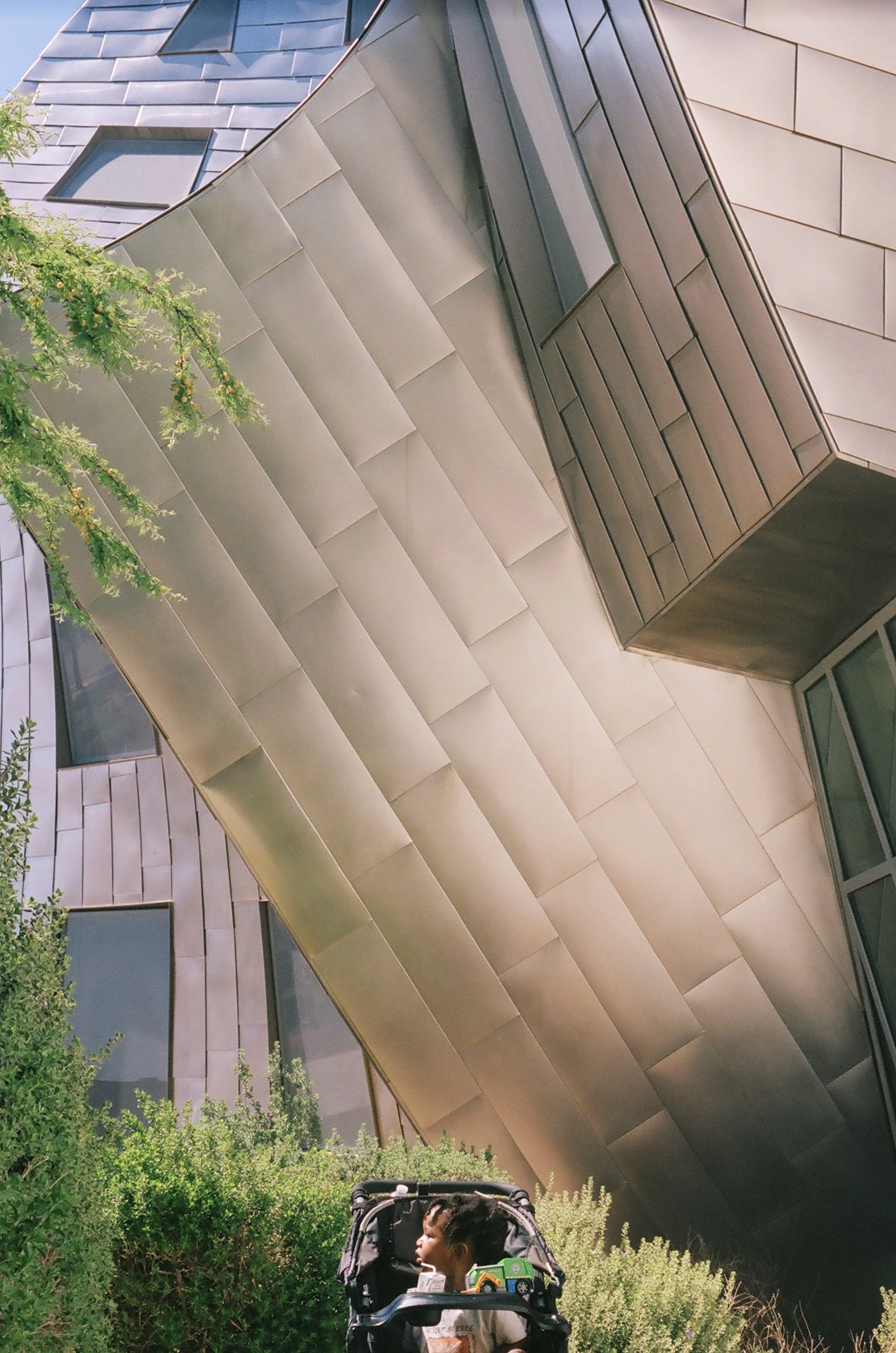
I had passed it hundreds of times. That is the thing about living in a city, you develop a selective blindness to its landmarks. You stop seeing them the way you saw them the first time. They become part of the background, part of the route, part of the logic of a place you already know.
I had passed the Lou Ruvo Center for Brain Health hundreds of times before I actually stopped.
What made me stop, that morning, was Azulu. He pointed at it. He doesn't have words yet for what he saw, the way the facade tilts and shears, the way the stainless steel catches the desert light and turns it into something alive, but he pointed, which is his way of saying: this. Look at this.
So I looked.
Frank Gehry's buildings have a reputation for spectacle, which is not wrong but is incomplete. What the reputation misses is the quality of attention the buildings reward when you get close enough. From a car, the Lou Ruvo Center is a folded mass of metal. On foot, at the edge of the facade, it becomes something else, a study in how a building can refuse its own stability, can appear to be in motion while remaining perfectly still.
I photographed it on film, which meant I had to choose carefully. Thirty-six frames on a roll. Each one a commitment. Standing there in the morning light, with Azulu beside me, I tried to find the angle that told the truth about the building, not the obvious truth, the thing you see from the street, but the honest one. The one that required proximity.
What I found is that the Lou Ruvo Center is most interesting at the edges. Where the building meets the ground, where the facade meets the sky, where the controlled chaos of Gehry's formal language touches something that has to be resolved. The resolution is always a little surprising. That is a quality I look for in architecture, and in people, and in photographs: the honest resolution of competing forces.
Azulu stopped pointing after a few minutes and moved on. He is a good editor. When something has given you what it has to give, you move.
I stayed a little longer. The light was still good.