Sister Dreamer: Lauren Halsey's Architectural Ode To Tha Surge N Splurge Of South Central
On Lauren Halsey's Sister Dreamer, the frequency of 23, and what it means to mother and document in the same breath.
Architecture · Las Vegas
A Study in Light and Stillness
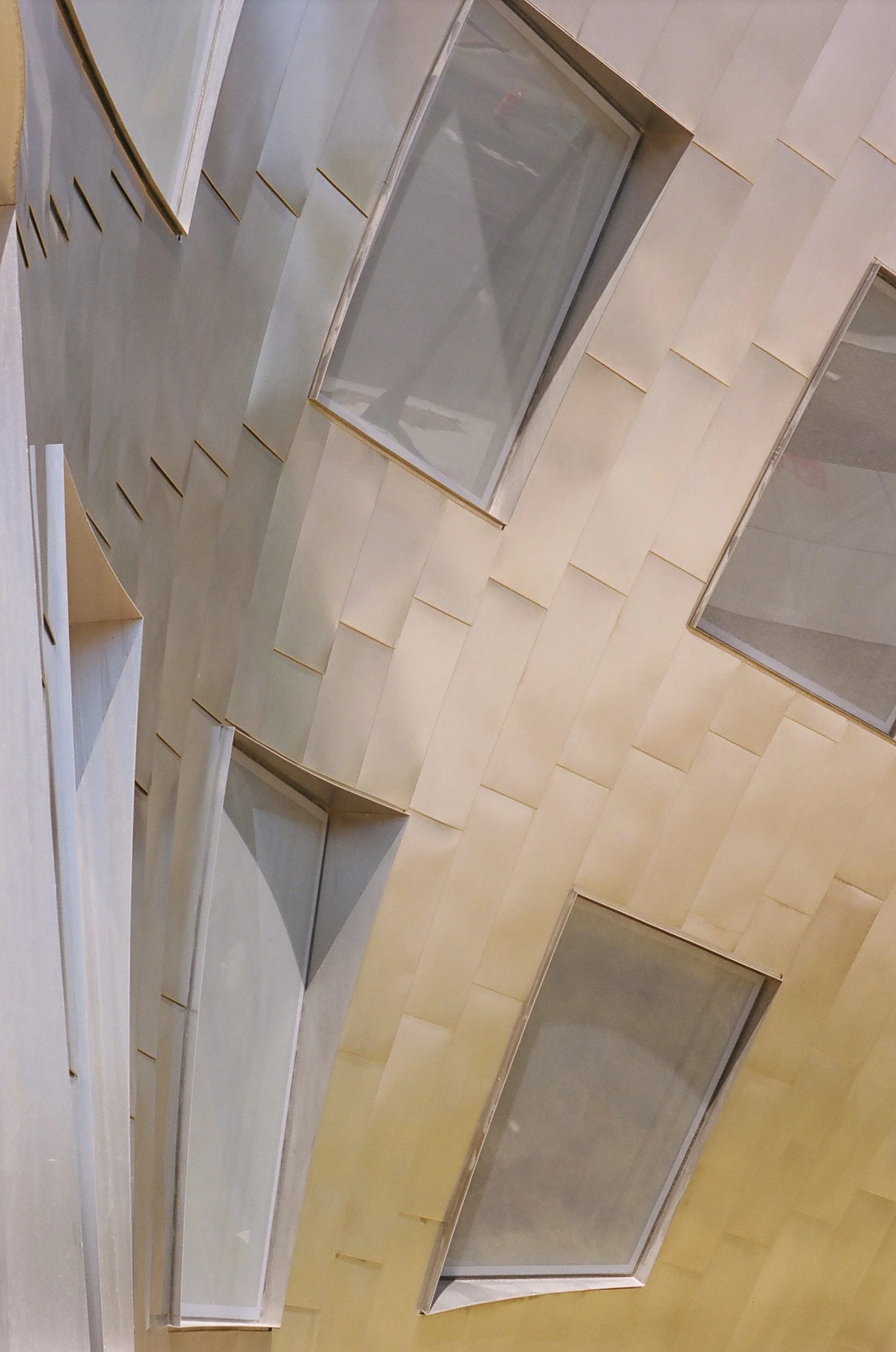
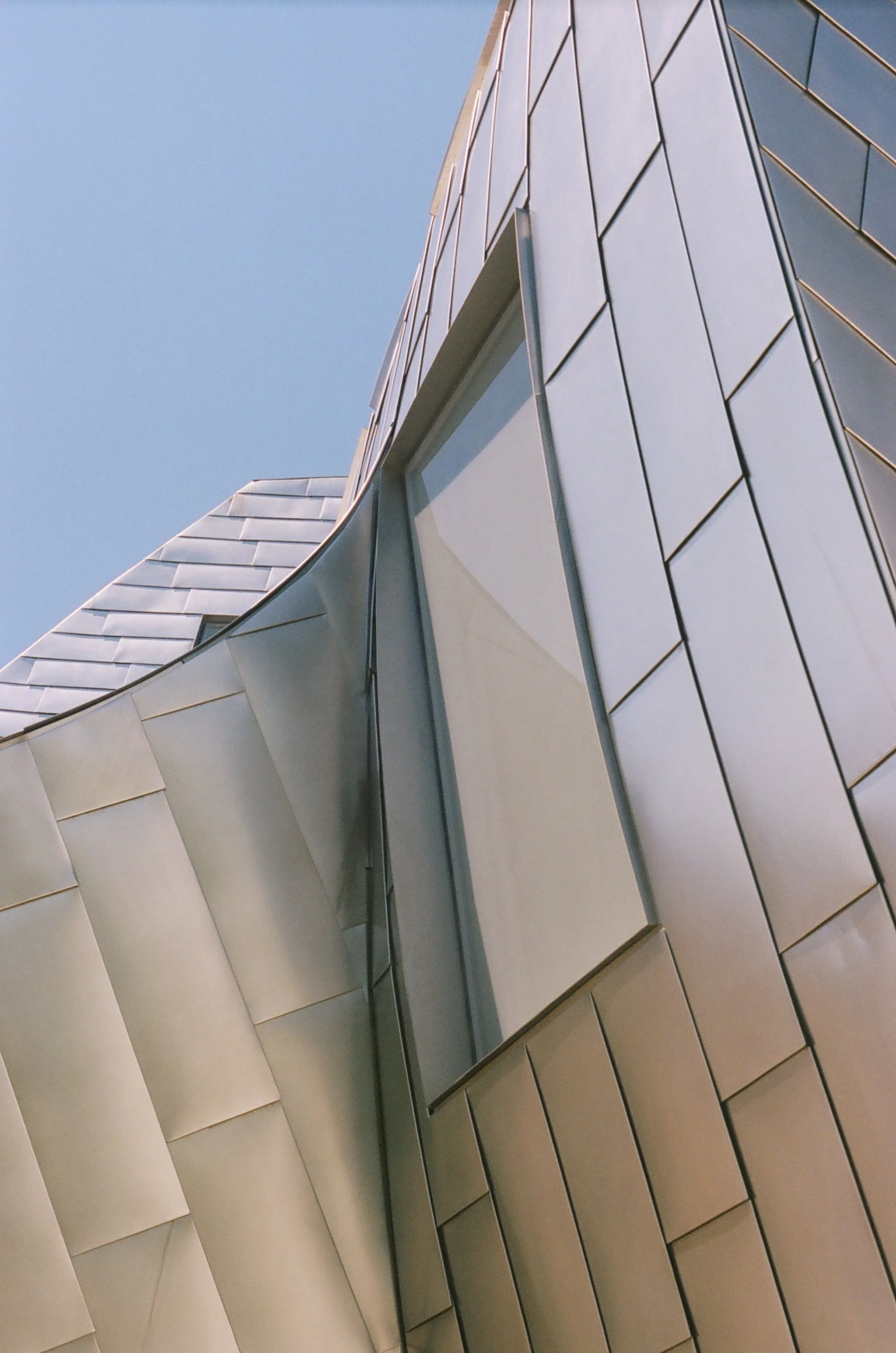
Frank Gehry's Lou Ruvo Center for Brain Health — experienced for the first time up close, in stillness, with Azulu beside me.
Motherhood · Mexico City
Motherhood in Motion
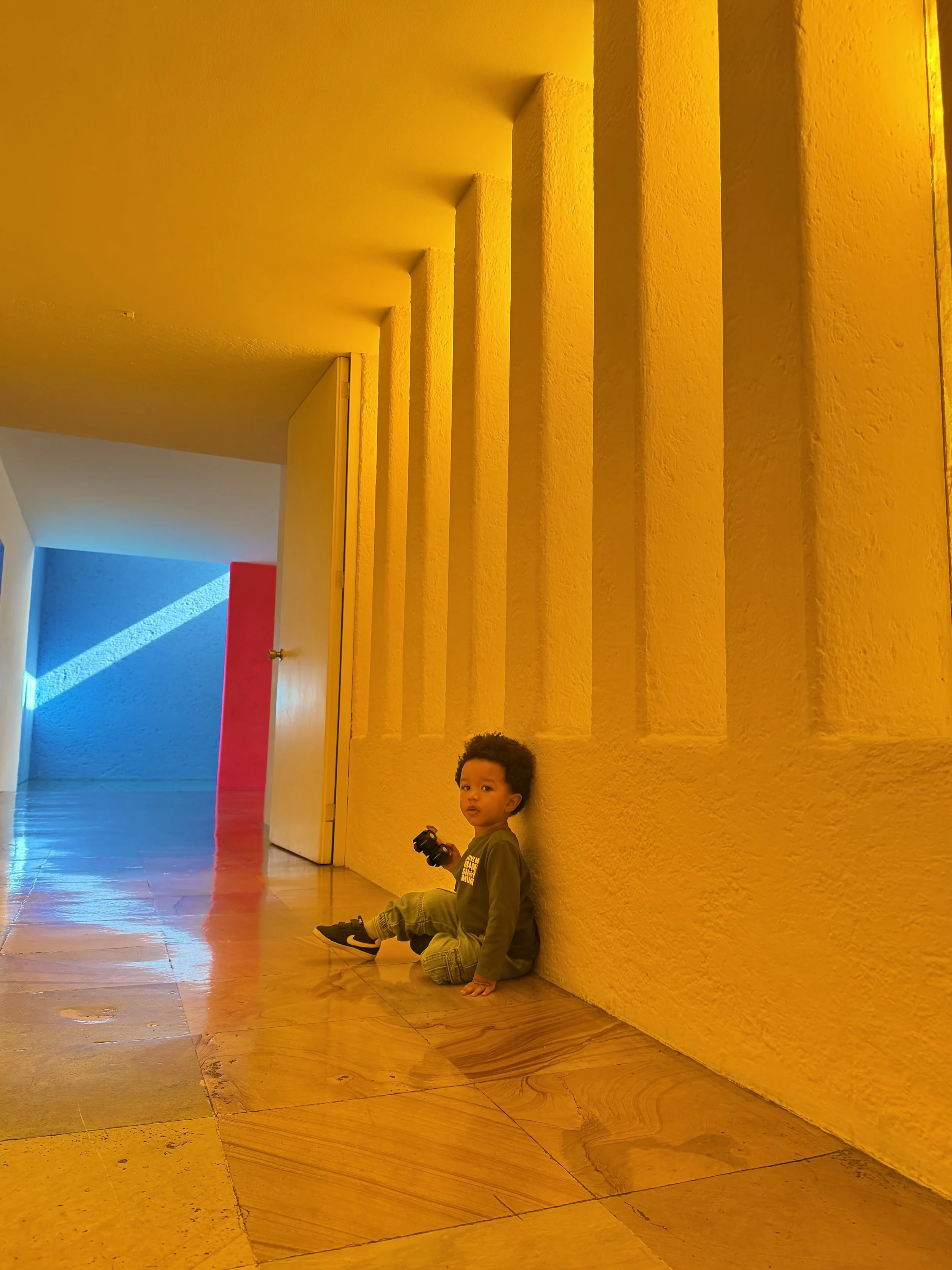
Some seasons of motherhood feel loud. This one — inside Casa Gilardi, in Mexico City — felt luminous.
Work that lives at the intersection of access and archive
I photograph what most cameras cannot reach — not because I have special access, but because I stay long enough to earn it. Shot on 35mm film. Guided by curiosity. Always accompanied by Azulu.
On seeing, mothering, and the practice of both at once
Keynotes, panels, and intimate conversations on architecture, documentary storytelling, intentional living, and the lived experience of motherhood as a creative practice — not a compromise to it.
Architecture + the GazeDocumentary StorytellingMotherhood + the Creative PracticeIntentional LivingThe Practice of SeeingFilm Photography
Preparing to document Monument House by Homestead Modern — a study in contemporary residential architecture. Coming next month on 35mm film.
Available for commissions. Booking inquiries for fall 2026 open now.
Portfolio
The Work
Documentary photography and writing for architects, editors, boutique hospitality, and publications that understand that the right image — made slowly, on film — lasts. Below is a selection of projects across architecture, destination, and the everyday.
Long-form writing at the intersection of architecture, place, motherhood, and the practice of seeing. Always on film. Always from the inside.
Latest Essay · Architecture + Documentary · May 2026
Sister Dreamer: Lauren Halsey's Architectural Ode To Tha Surge N Splurge Of South Central
On Lauren Halsey's Sister Dreamer, the frequency of 23, and what it means to mother and document in the same breath — shot on a Minolta SRT-101 on 35mm film.
Read the essay →
Motherhood · DocumentarySouth Central, Los Angeles
He Doesn't Know He's in the Frame. That's Why He Belongs There.
On photographing Azulu — what a two-year-old brings to a documentary practice without knowing it, and why his presence in the work is not incidental.
Motherhood · Mexico CityMexico City, 2026
Motherhood in Motion
Some seasons feel loud. This one — inside Casa Gilardi, in Mexico City — felt luminous. On beauty after grief, and mothering while becoming.
Architecture · Luis BarragánMexico City
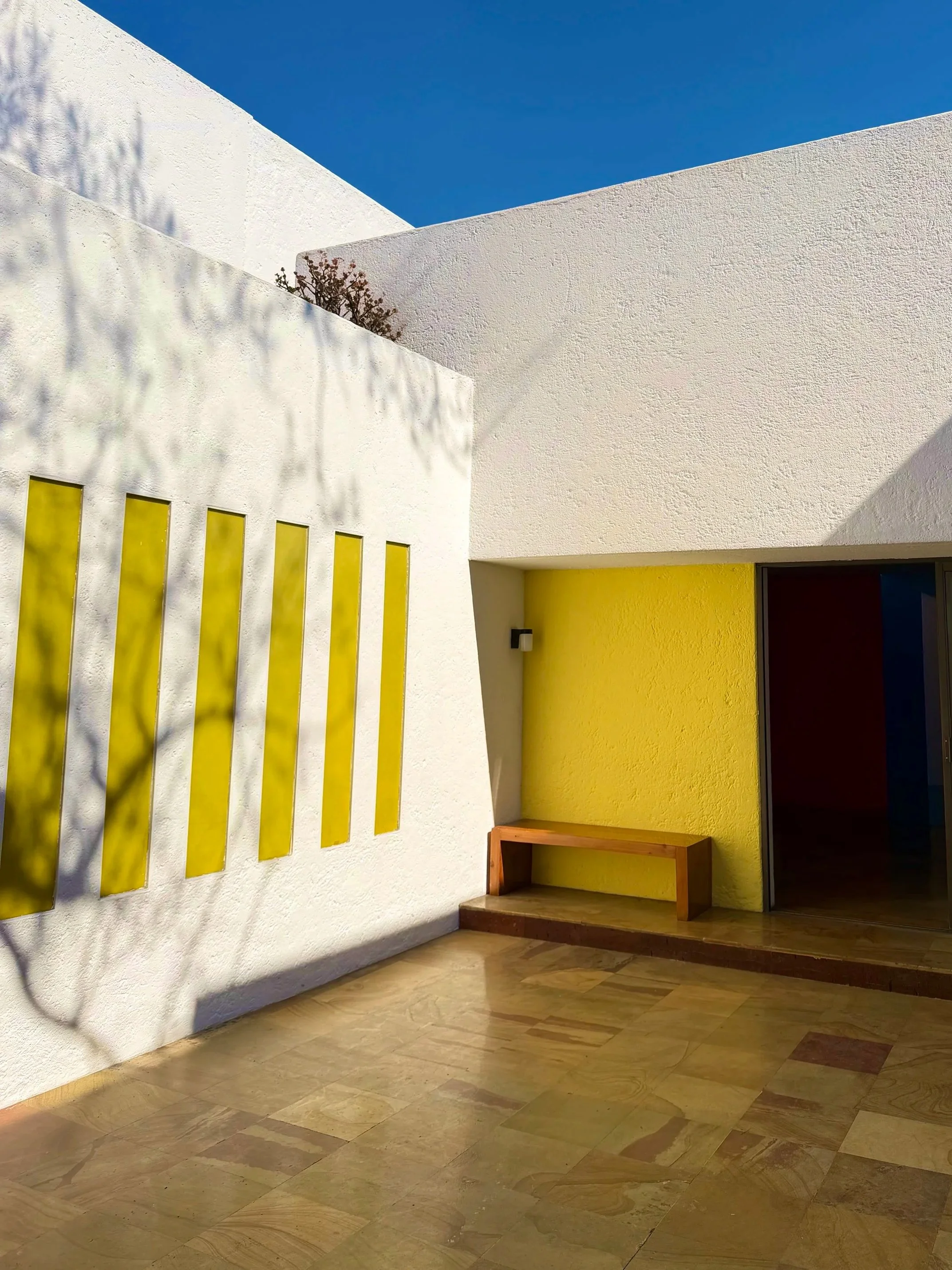
Casa Gilardi — A Study in Light, Color, and Stillness
Luis Barragán's masterwork doesn't rush to reveal itself. Neither do the people who move through it slowly enough to understand.
Architecture · Frank GehryLas Vegas, NV
A Study in Light and Stillness
Frank Gehry's Lou Ruvo Center — experienced for the first time not from a distance, but up close, in stillness, with my son beside me.
Destination · InteriorsMexico City
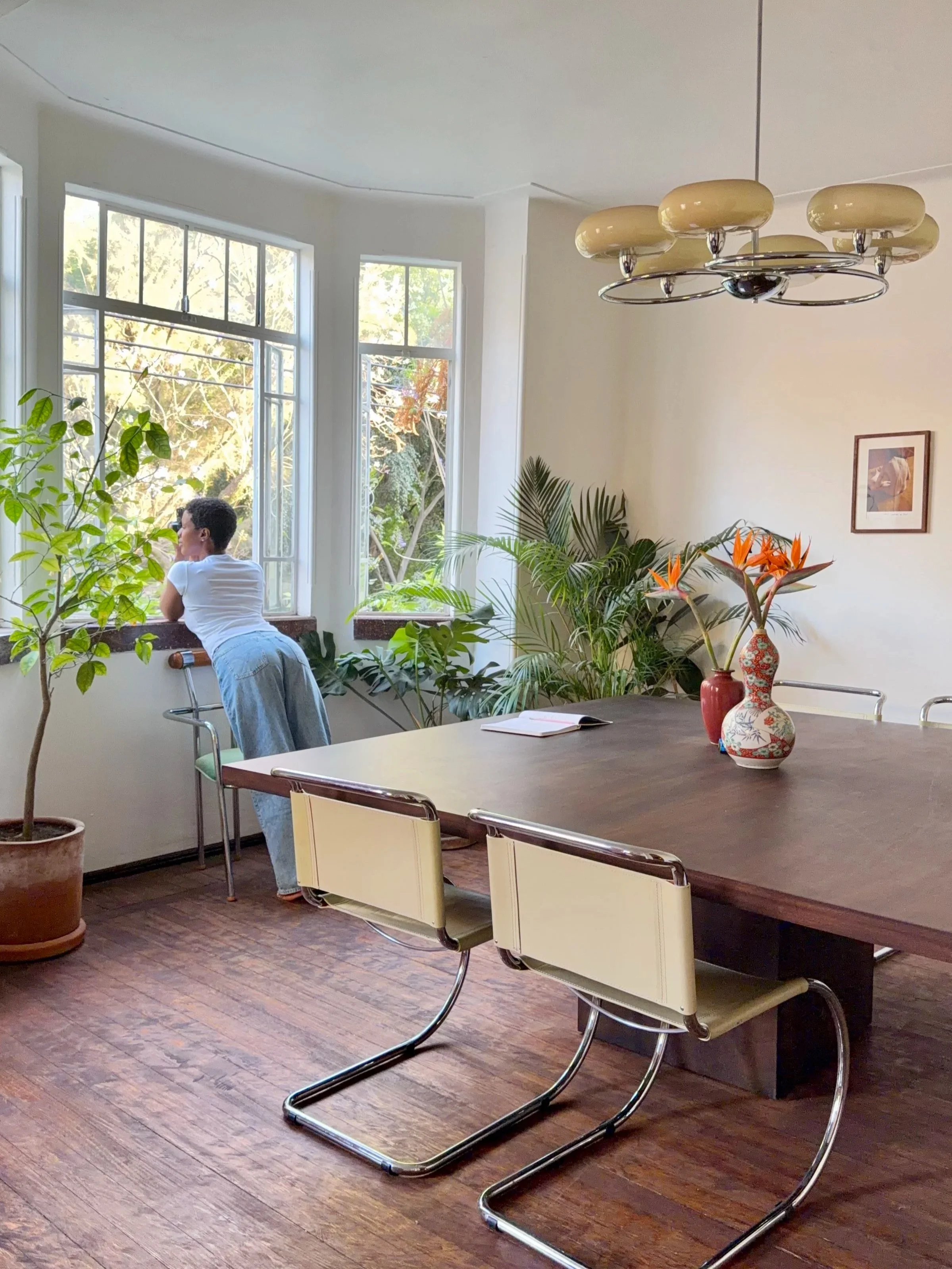
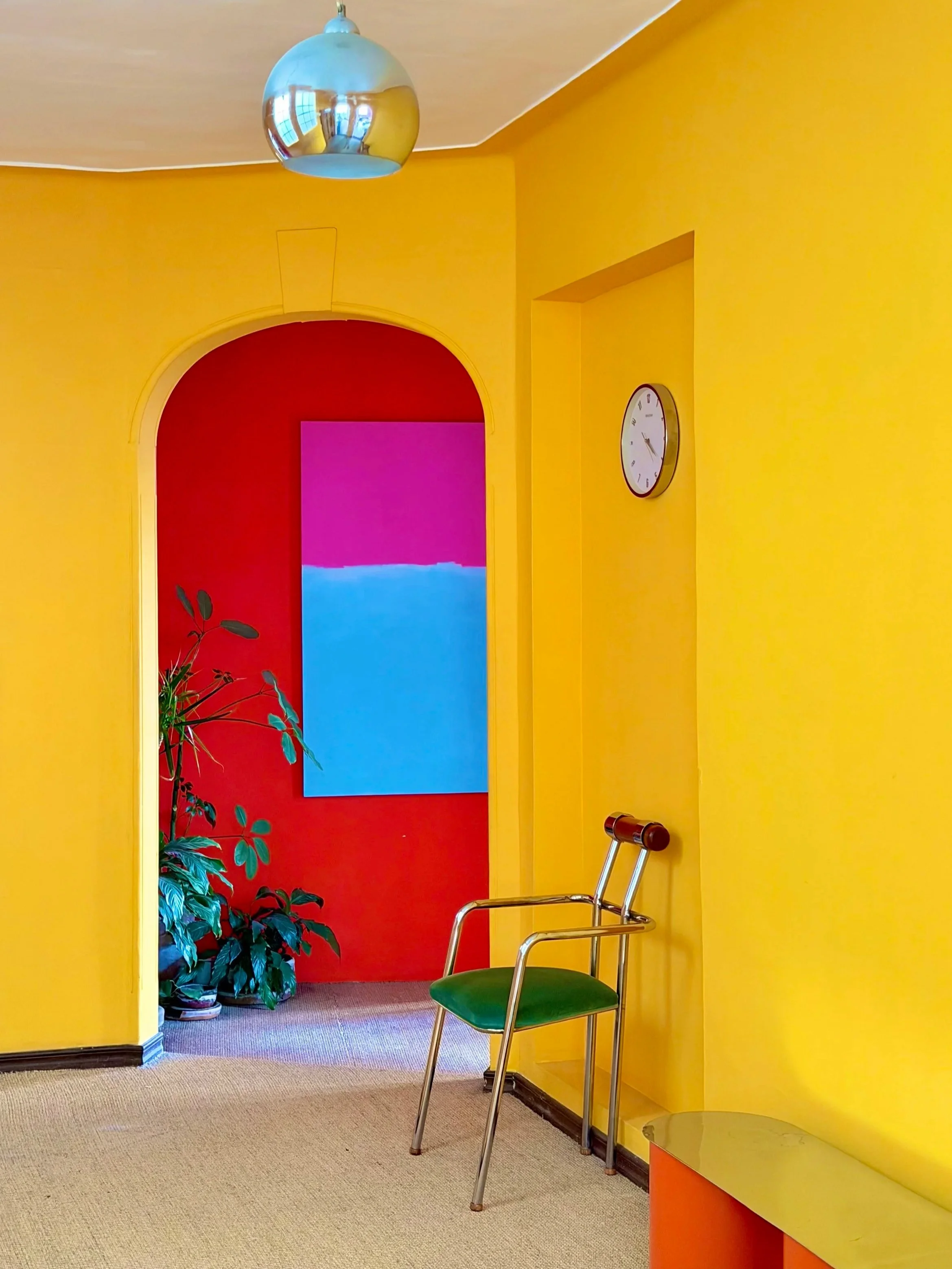
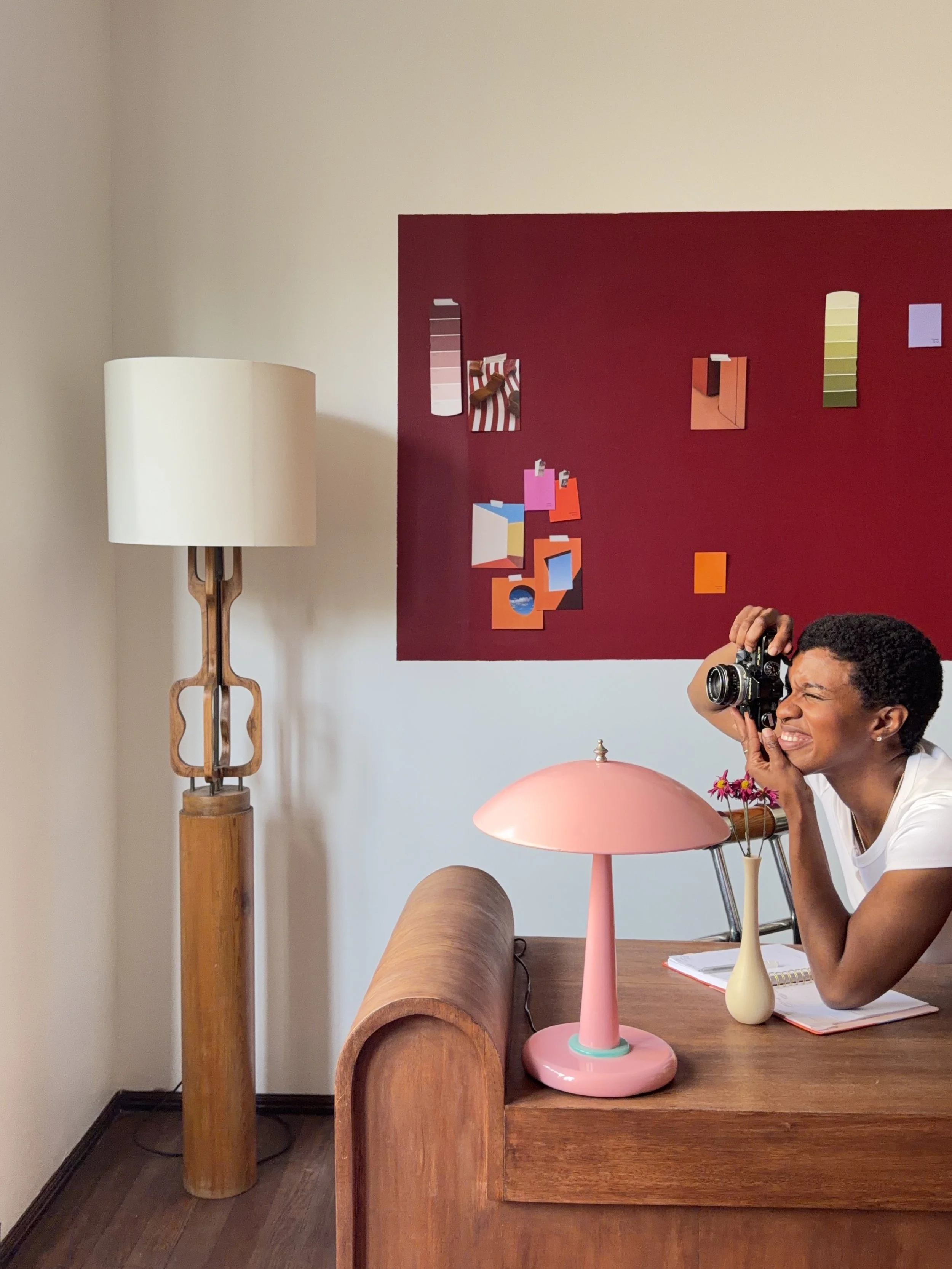
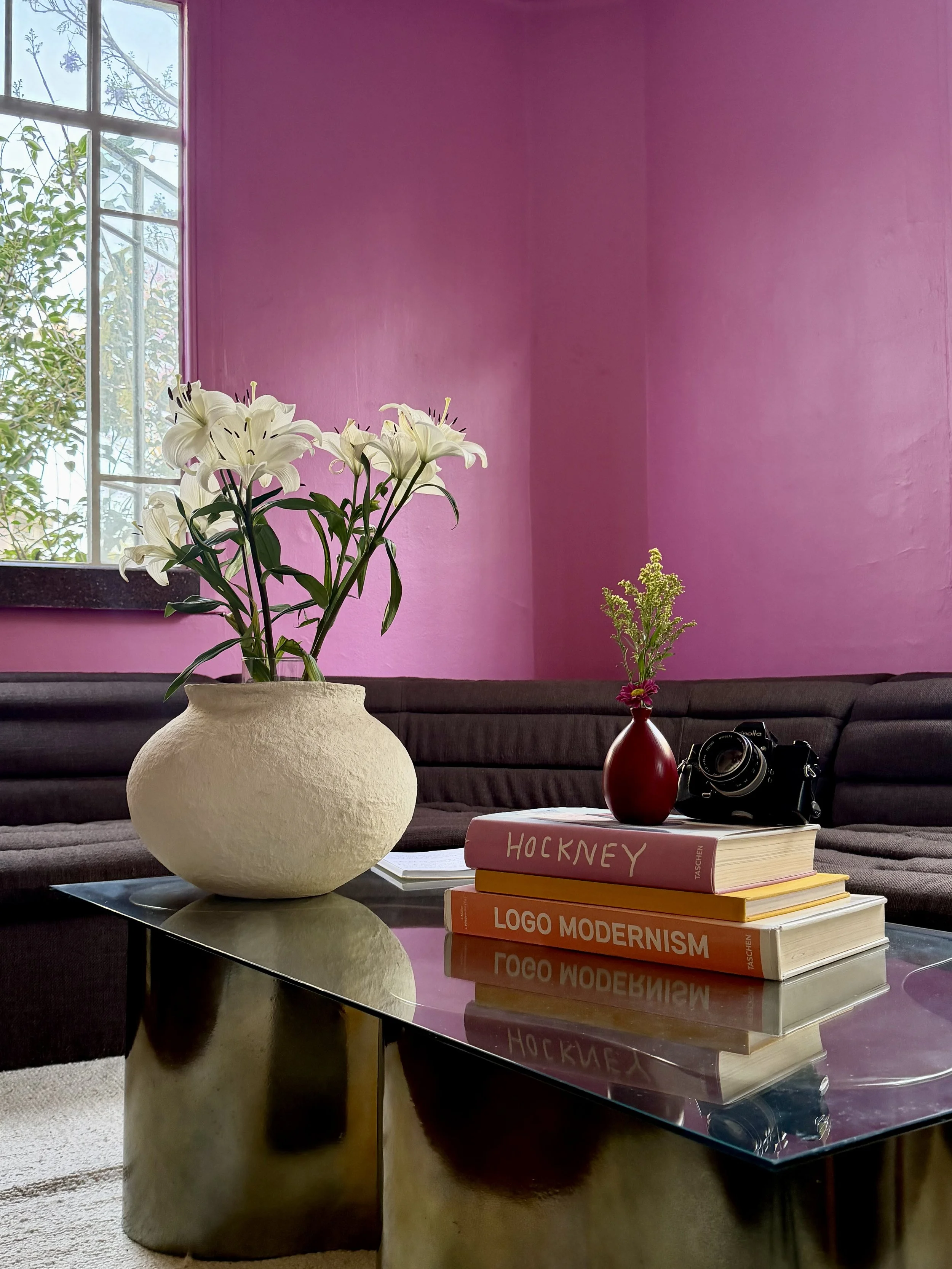
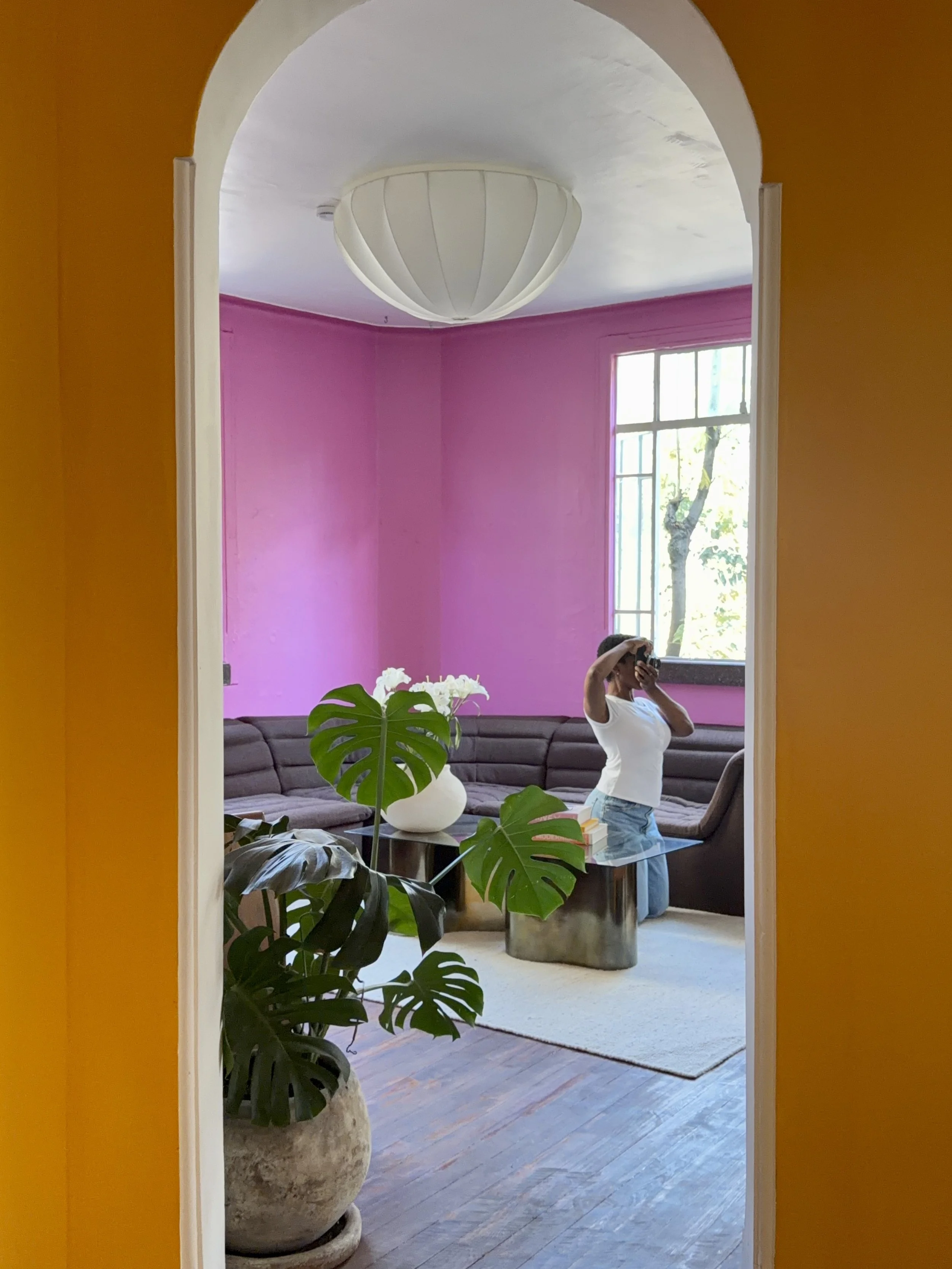
A Colorful Design Sanctuary in La Condesa
On the apartment in Mexico City where Azulu and I lived briefly — and what it means to feel genuinely at home in a place you've just arrived.
Tatiana Donaldson
There are certain spaces that stay with you — long before you ever step inside them. I've always been drawn to that feeling. The way light moves through a room. The way a place can hold both stillness and movement at the same time. That attention — to space, to presence, to what a room asks of you — is where my work begins.
I'm a writer and visual documentarian exploring space, presence, and intentional living through architecture, travel, and motherhood. My work lives at the intersection of design and experience — documenting not only what a space looks like, but how it feels to move through it.
I am a single mother raising my son Azulu, who is two years old. He is with me almost every time I shoot. He has stood in front of monuments, wandered through architectural spaces, and been the small barefoot figure in the frame that makes the scale of everything else legible. The practice of motherhood and the practice of seeing are the same practice. I have stopped treating them as competing priorities.
"Motherhood has deepened that lens — bringing a different kind of awareness, softness, and intention to the way I see and move through the world."
I shoot on 35mm film — primarily a Minolta SRT-101. Film slows the decision. It makes the frame deliberate. Every image is a commitment. Over time, documenting like this — moving slowly, observing closely, allowing a space to unfold — has become a practice in itself. A return to myself. A way of integrating all the parts of my life that matter most.
I'm drawn to spaces that feel intentional. Spaces that invite you to slow down. Spaces that reveal themselves over time. Through image and story, I document the quiet beauty within them — paying attention to the details that might otherwise go unnoticed. This work is a living archive of where I've been, what I've seen, and how I'm learning to be present within it all.
Based in Las Vegas. Often traveling between cities and countries. Available globally.
I work with brands, architects, editors, hospitality groups, and organizations who understand that the right image — made slowly, with intention, on film — is worth more than a hundred made quickly. If you're building something that matters, I want to help you document it.
Boutique Hospitality
Intimate photography for independent hotels, resorts, residences, and hospitality brands that have a story architecture can't tell alone. I bring the editorial eye and the patience to find the light that makes a space feel the way it actually feels.
Campaign · Editorial · Brand
Architecture + Design Partnerships
Documentary photography for architects, interior designers, and developers who want their work seen and understood — not just photographed. I work closely with design teams to capture the intention behind the space.
Documentation · Publication · Archive
Editorial Commissions
Photography and long-form written essays for publications covering architecture, culture, travel, and design. I pitch, report, photograph, and write — a complete editorial package in one voice.
Print · Digital · Independent Press
Destination Storytelling
Immersive documentary work for places, cities, and destinations that want to be understood from the inside. I arrive early, stay long, and photograph what daily life actually looks like.
Tourism · Cultural · Editorial
Motherhood + Intentional Living
Brand partnerships and campaign work centered on motherhood, intentional parenting, and conscious living. I am a single mother of a two-year-old, and I speak from inside this life — not above it.
Brand · Campaign · Long-Term Partnership
Speaking + Events
Keynotes, panels, and in-conversation sessions on architecture and the documentary gaze, the practice of seeing, motherhood and the creative life, and intentional living as a lived philosophy. These talks are grounded in experience, not theory.
Conference · Cultural Institution · Brand Event
Visual Storytelling & Film Photography
Commissioned visual storytelling for brands, publications, and cultural institutions. The full range — concept, photography, written narrative — delivered as a complete editorial package shot on 35mm film.
Editorial · Brand · Cultural
Licensed Photography
Licensing of existing archive photography for editorial, commercial, and advertising use. Fine art prints available through the Shop. All licensing inquiries welcome.
Editorial · Commercial · Fine Art
Ready to begin?
Tell me what you're building. I'll tell you whether I'm the right person to document it.
Each print is made from original 35mm film photography — shot on a Minolta SRT-101, developed and scanned by hand. Archival pigment prints on fine art paper, signed and numbered. Made to order. Limited editions only.
To purchase, email hello@tatianadonaldson.com with the title and your preferred size. I'll confirm availability and send an invoice.
About the Process
All prints in this archive are shot on 35mm film — a Minolta SRT-101, developed and scanned by hand. The grain, the light, the slight imprecision of analog photography is intrinsic to the work. These prints are made to live on walls, not in archives.
All photography is available for editorial and commercial licensing. Rights-managed options for publications, brands, and advertising. Commission inquiries also welcome — I can be engaged to create new work for a specific brief.
He Doesn't Know He's in the Frame. That's Why He Belongs There.
On photographing Azulu — what a two-year-old brings to a documentary practice without knowing it, and why his presence in the work is not incidental
Tatiana Donaldson · South Central, Los Angeles · Shot on 35mm film
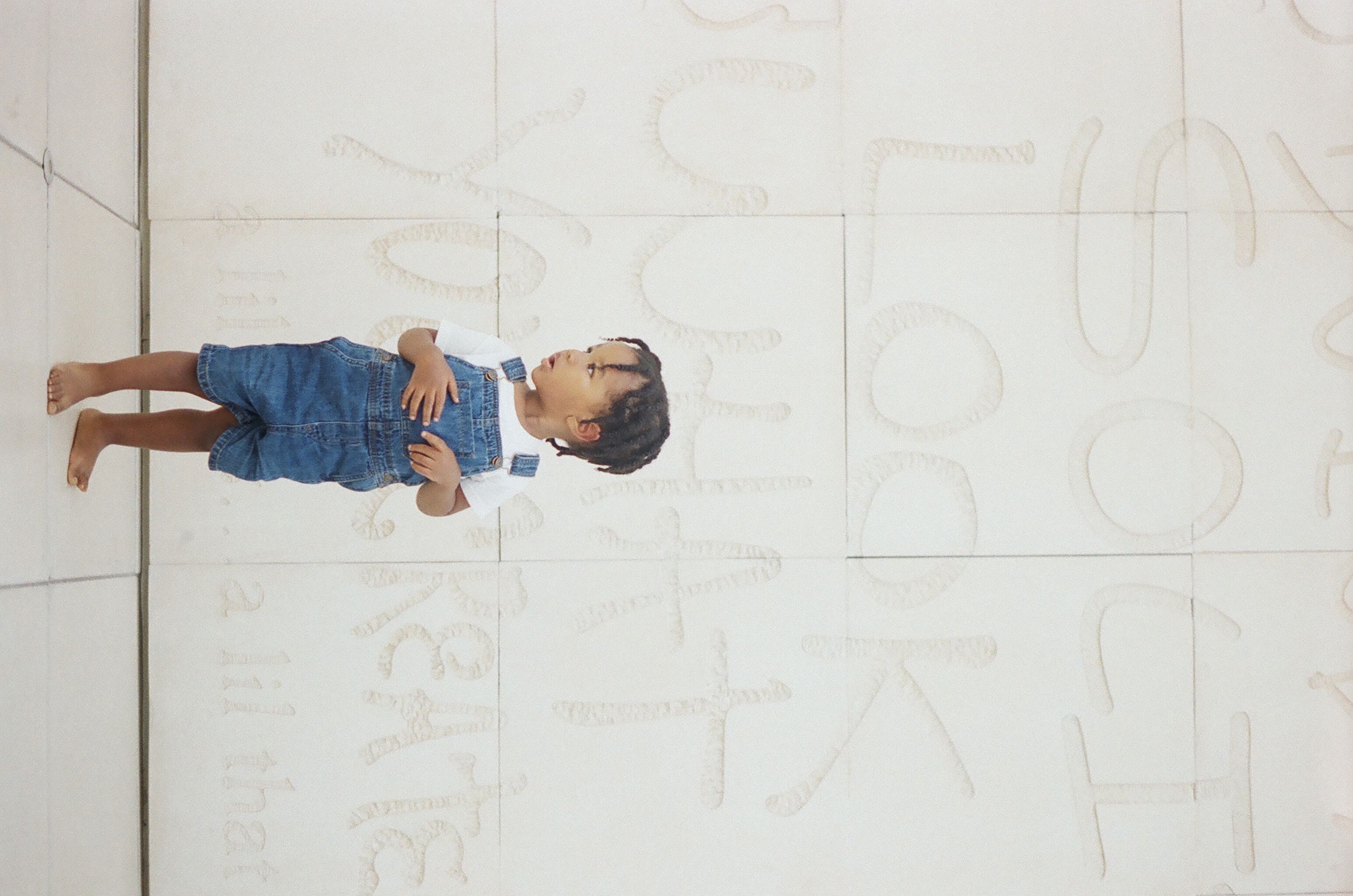
Azulu. Sister Dreamer, South Central, Los Angeles. 35mm film. Minolta SRT-101.
He has no idea what I'm doing when I raise the camera. He doesn't hold still. He doesn't look at the lens on command. He walks toward things that interest him and away from things that don't. He has no investment in the outcome of any image I make. That is exactly why the images work.
Azulu is two years old. He has been with me at Frank Gehry's Lou Ruvo Center for Brain Health, standing in the shadow of corrugated steel. He has run his fingers along the carved walls of Lauren Halsey's Sister Dreamer in South Central Los Angeles. He has sat inside Casa Gilardi in Mexico City, in the yellow light of Luis Barragán's corridor, unbothered by the fact that he was inside a building that architects cross oceans to visit. He was just sitting. He was just being.
That is the gift he gives to every frame he enters. Scale. He makes the architecture legible. A building that might otherwise feel cold or remote becomes comprehensible next to a small figure in overalls who is looking up at it with complete openness, no filter between himself and what he sees. He does not have a predetermined reading of the space. He walks in and he simply responds — to the light, the texture, the sound. He is the most honest subject I have ever photographed.
"I did not plan to make him part of the practice. He just kept showing up in the frame, and the frames kept being the ones that mattered most."
There is a question people ask, sometimes with genuine curiosity and sometimes with judgment behind it: is it ethical to photograph your own child? To put him in the work without his consent? I have thought about this carefully. My answer is that I am not documenting his vulnerability. I am documenting his presence — and his presence is what makes the work true. He appears in these images the way a child appears in the world: unselfconscious, unguarded, entirely himself. That quality cannot be staged or asked for. It can only be witnessed.
I am a documentarian. My practice is grounded in the observation of real life, in the refusal to arrange or perform. Azulu is the most real part of my life. He is always there. To remove him from the work would be to remove the thing that makes the work honest.
Standing in front of Sister Dreamer, he did not know he was inside a monument to the refusal to be erased. He did not know about Lauren Halsey, or South Central's history, or what the carved names on the wall meant. He just stood there, barefoot, looking up. And that image — his body in front of the stone, his complete ease inside a space built to hold memory and grief and dignity — became, for me, the most complete image of the whole day. Not despite his not knowing. Because of it.
He is two years old. He has already been inside more significant spaces than most people visit in a lifetime. I do not think that is a coincidence. I think it is the result of a deliberate choice to stop waiting until conditions were easier, to stop leaving my child on the side of the practice and invite him into the center of it. The practice of motherhood and the practice of seeing are the same practice. Azulu is the proof.
Sister Dreamer: Lauren Halsey's Architectural Ode To Tha Surge N Splurge Of South Central
On Lauren Halsey's Sister Dreamer, the frequency of 23, and what it means to mother and document in the same breath
Tatiana Donaldson · May 23, 2026 · South Central, Los Angeles · Shot on 35mm film
Sister Dreamer — South Central, Los Angeles. 35mm film. Minolta SRT-101.
We drove into Los Angeles the night before. May 23rd was dedicated entirely to Sister Dreamer — I had decided that quietly, intentionally, the way I make most of the decisions that matter to me. For two and a half months, I had been visualizing this. I had watched the grand opening happen in March from a distance, on Instagram, and fallen in love with all of it: the art, the history, the community, the architecture, the sheer audacity of what Lauren Halsey had built in the middle of South Central. Something in me knew, even then, that I was being drawn toward it. I just didn't yet know what the universe was arranging on the other end of that pull.
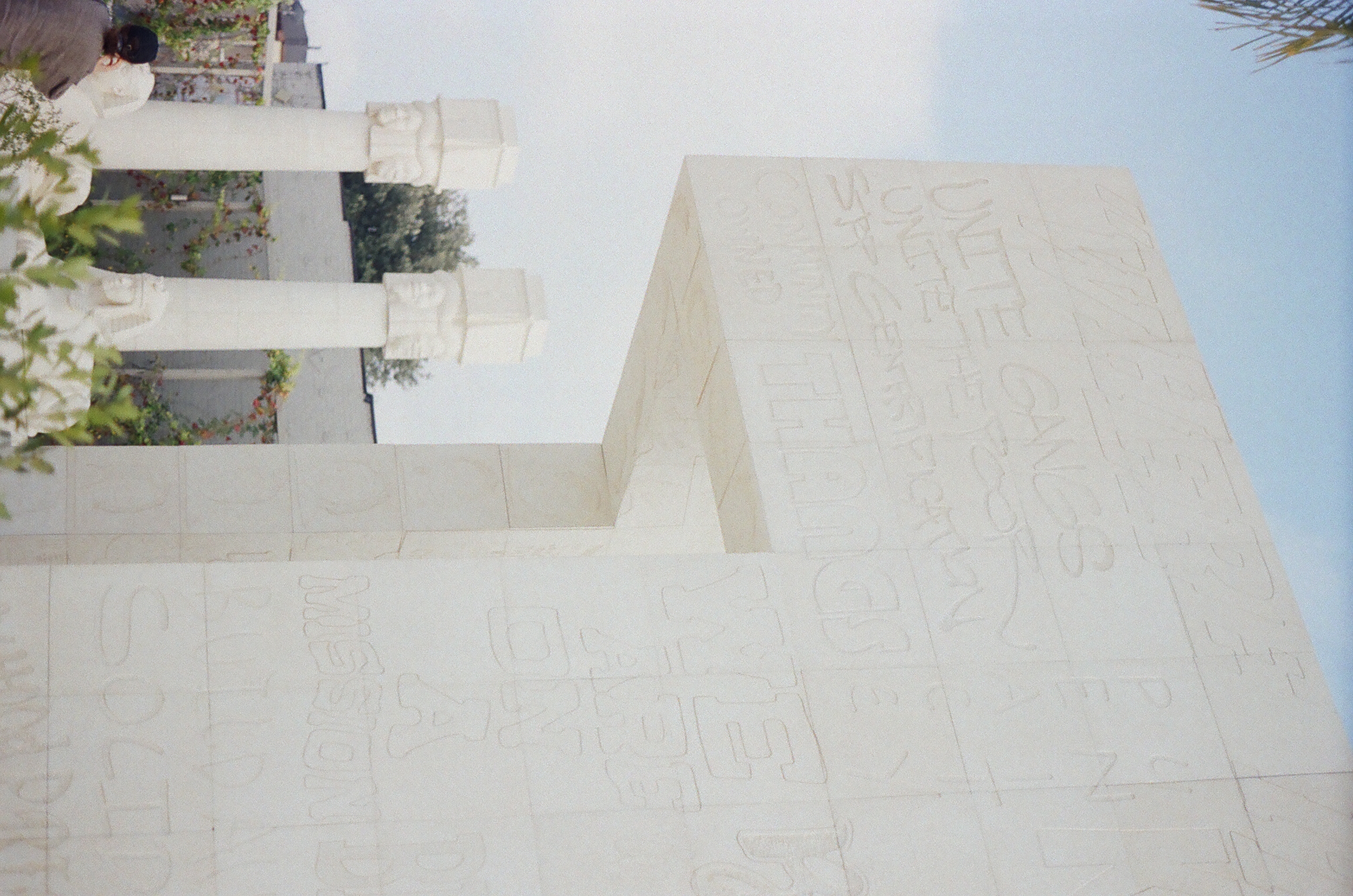
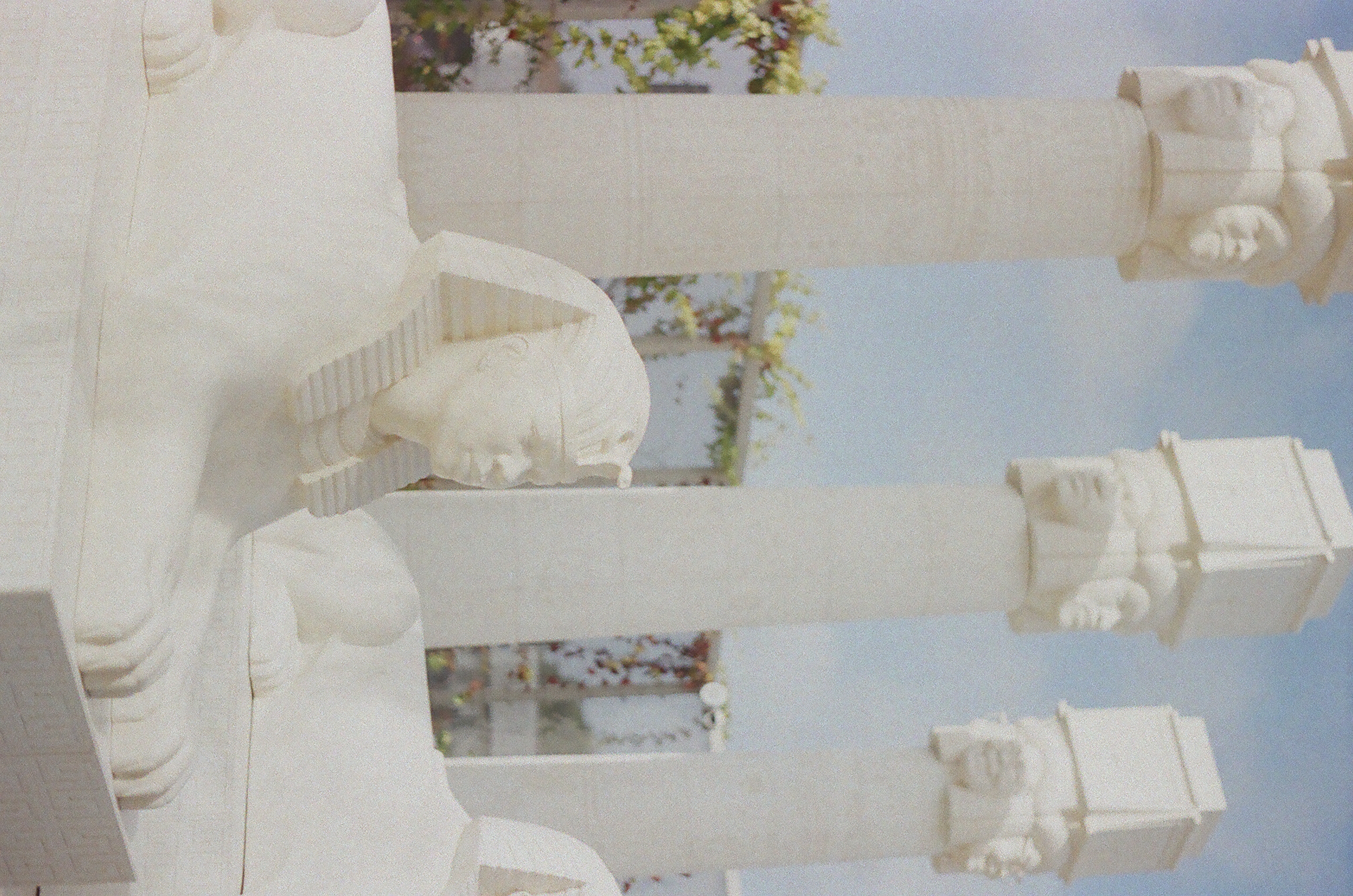
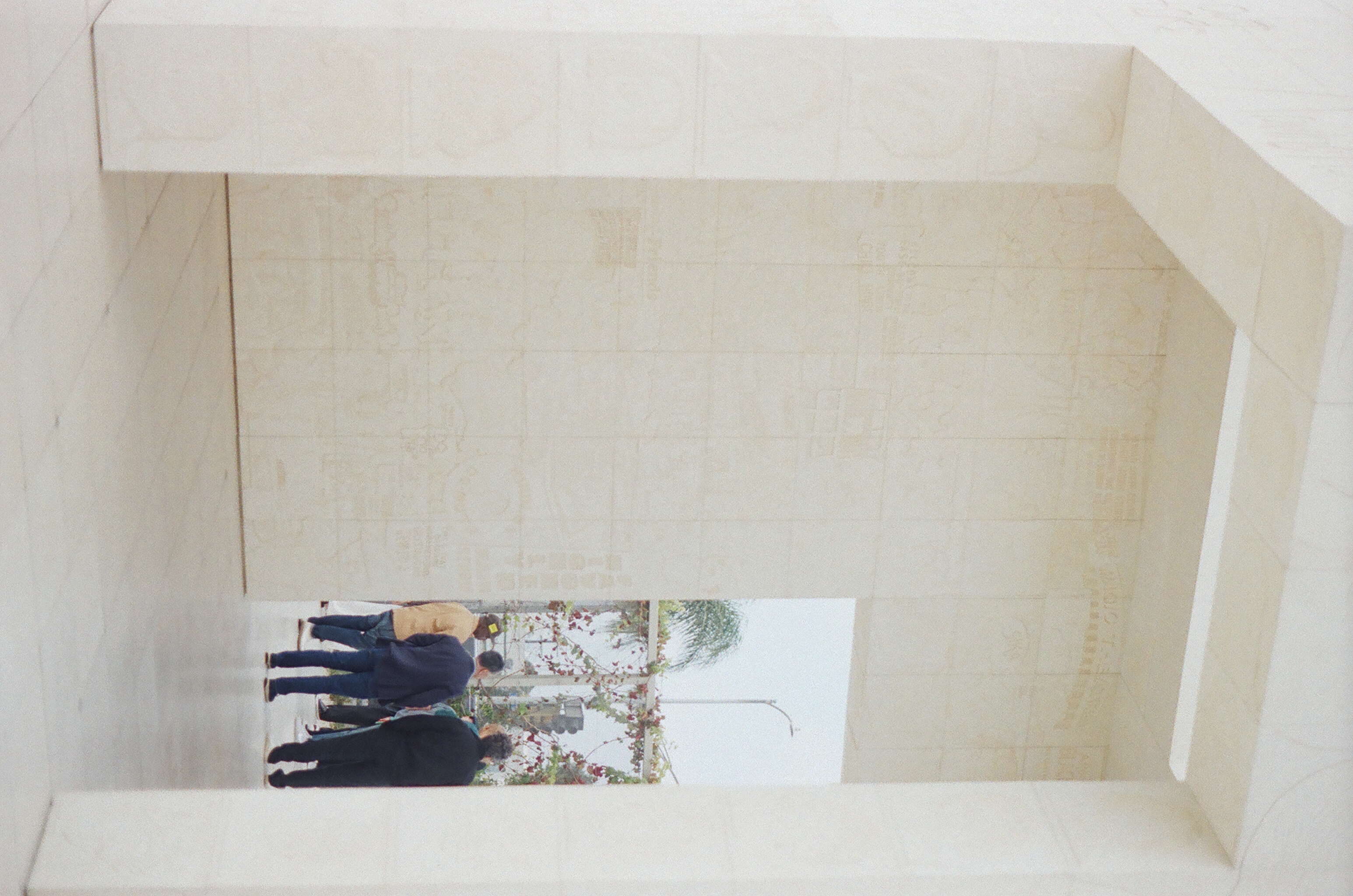
Sister Dreamer is Lauren Halsey's architectural monument to tha surge n splurge of South Central Los Angeles — carved stone, gilded surface, and the names of businesses, songs, phone numbers, and people that defined a neighborhood across decades. Robin Daniels. Rosie Lee Hooks. Margaret Prescod. Patrice Rushen. Beauty supply stores and block institutions. The ordinary sacred made permanent in stone. Black culture, Black history, Black community — encoded into walls designed to last. Halsey understood that this archive wasn't being built anywhere else. So she built it herself. That is what it looks like to refuse erasure.
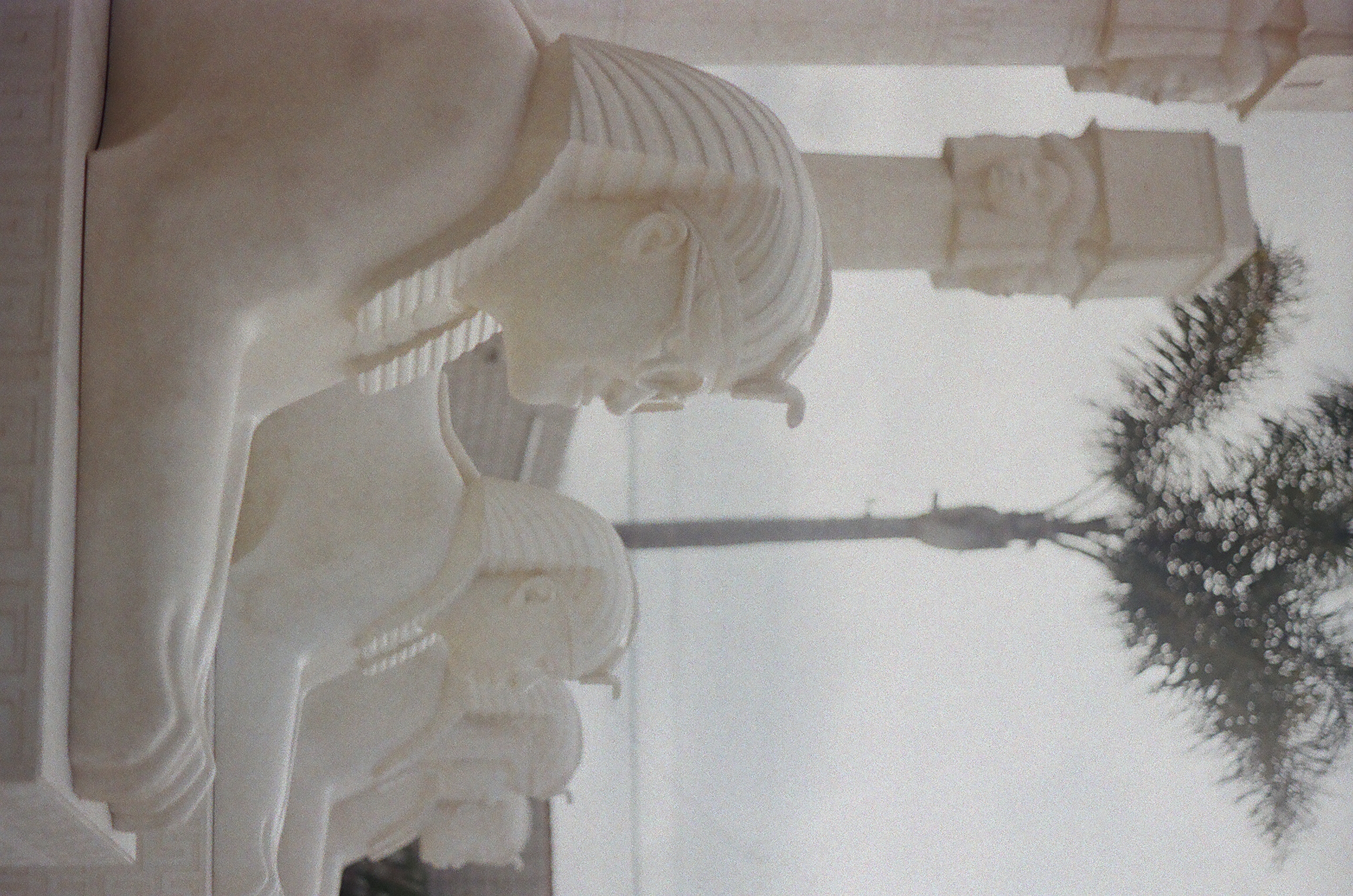
The sphinxes — carved guardians at the entrance of Sister Dreamer. South Central, Los Angeles. 35mm film.
Black history is foundational to the fabric of this country, and places like South Central carry so much of what history moves past without looking back. What gets lost. What goes undocumented. What disappears between one generation and the next if no one chooses to hold it. My entire practice is built around that choice — around witnessing and preserving the things that others overlook, in spaces that deserve to be seen. Standing inside Sister Dreamer felt like a mirror. I am deeply moved by Black artists who stand firm in their calling, who claim ownership over their art and their space and what they put into this world. That kind of commitment is not only inspiring. It is a reflection. I saw myself in this work — not in vanity, but in recognition.
I shoot on 35mm film because it asks the same things of me that this era of my life has been asking: presence. patience. intentionality. You cannot fake your way through a roll of film. You cannot go back and delete what didn't come out right. You see what is in front of you, you trust your instincts, you press the shutter, and you wait. That discipline has shaped how I move through the world — slowly, deliberately, with vision and reality held in the same hand. I had visualized this day for two and a half months. I missed the grand opening and trusted that the timing would still be right. Film photography has taught me that the right moment does not always arrive when you expect it. It arrives when you are prepared to receive it.
The installation also houses programs — STEM education, free services, community resources, a living space for the people Halsey grew up around. It is not a monument you observe from a distance. It is one you walk into. Azulu walked into it. He ran his fingers along the carved walls. He stood barefoot in his overalls in front of the wall that reads LOOK WHAT YOU CREATE, not knowing he was standing inside a thesis about belonging and memory and the refusal to be erased. He is two years old. He will not remember being here. But I brought him here intentionally — because it matters that he is immersed in spaces built by people who look like us, for people who look like us, before he even has the language to understand what that means. These are the spaces that shape a child's sense of what is possible. I wanted him inside this one.
I had been there for at least thirty minutes. I was immersed — shooting, watching, recording, feeling the weight of the space settle into me the way film grain settles into shadow. Azulu was with me the way he always is: present, curious, unbothered by the significance of things. And then I looked up.
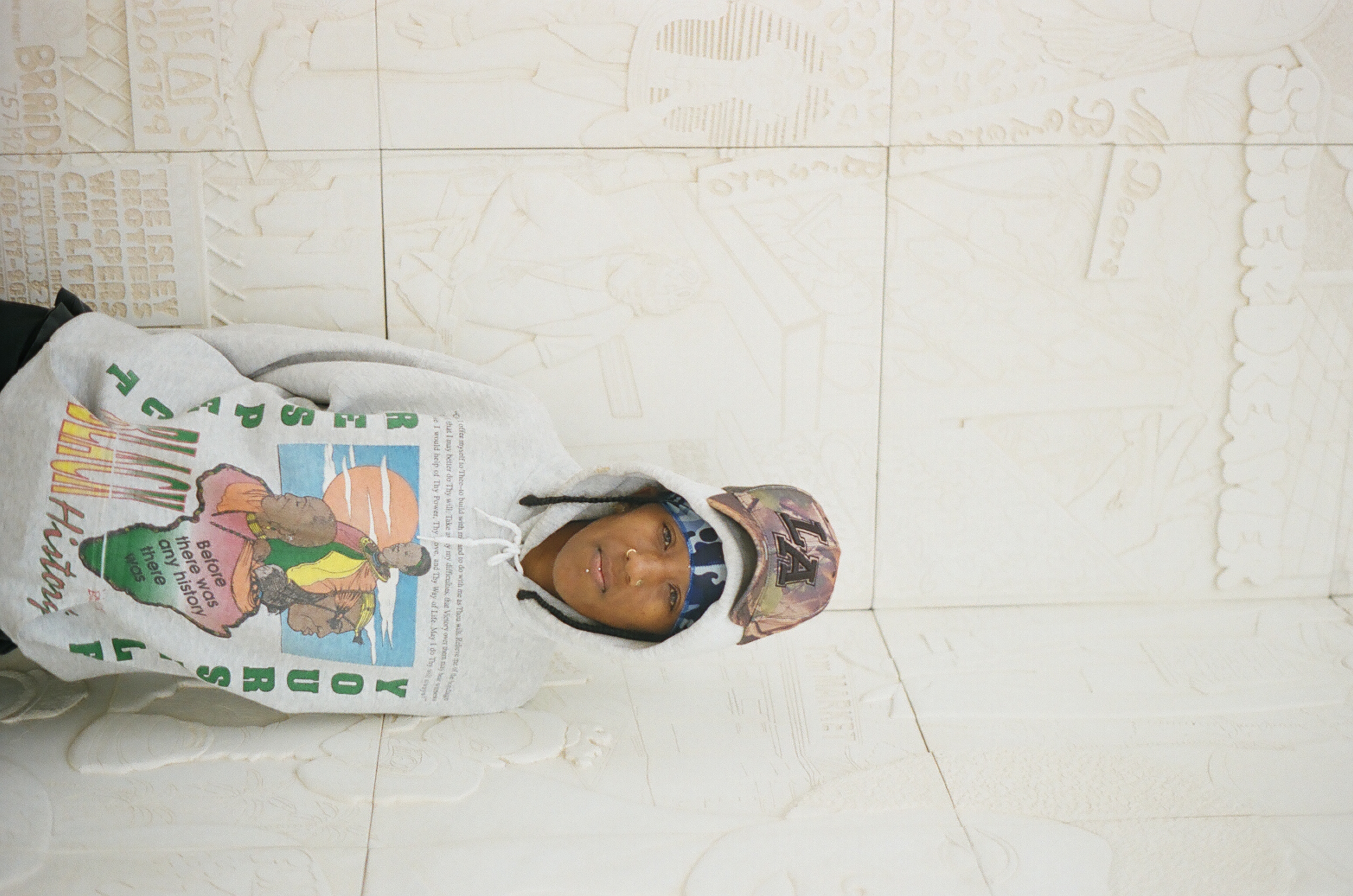
Lauren Halsey inside Sister Dreamer. South Central, Los Angeles. 35mm film, Minolta SRT-101.
There she was. Lauren Halsey. Standing among a small, intimate group — scholars, art enthusiasts, and Azulu and I. Something in me registered the date before I registered her face. May 23rd. My son and I are both born on February 23rd. Something about the 23rd always arrives on a different frequency — a particular vibration, a specific alignment. The visualization had become real. She spoke for over thirty minutes. Her passion, her truth, her full ownership of this space and this work and this neighborhood's right to be honored. I listened. I recorded her on my iPhone. And then, quietly and clearly, it dawned on me — the way the right decisions always come to me: introduce yourself. Ask to photograph her on film.
"I shared with her that my son and I had driven from Las Vegas specifically for Sister Dreamer. That I am a documentarian. That I shoot on film. She said yes."
She said yes.
Azulu inside Sister Dreamer. South Central, Los Angeles.
I photographed her on my Minolta SRT-101. On 35mm film. Standing against the wall she carved, with the words SISTER DREAMER etched in stone above her head, wearing a hoodie that read Respect Yourself / Black History. She is the work. The archive of South Central surrounds her — the names, the songs, the faces — and she is standing inside all of it. Completely still, completely present. A monument inside a monument.
I didn't plan for Lauren Halsey to be there that day. I just showed up prepared. Two and a half months of visualization. A day dedicated entirely to this space. A camera loaded with film. My son in my arms. That is what preparation looks like — not a guarantee, but a readiness. And the universe, when it finds you ready, tends to show up. I have come to understand this more fully in recent years: that I can move through the world as Tatiana and as a mother at the same time. That these things do not compete with each other. They compound. The intentionality of my practice, the patience of film, the presence that motherhood demands — all of it brought me to a May afternoon in South Central, standing in front of Lauren Halsey with my camera, on a day that began in Topanga Canyon and ended inside a monument. I do not call that coincidence. I call it alignment. I call it what happens when you stay the course long enough for the moment to find you.
Most people experienced Sister Dreamer at its launch in March. Mine arrived on May 23rd. I don't call that late. I call it exactly on time.
Sister Dreamer — open March 14, 2026 through 2027. Western Ave & 76th St, South Central, Los Angeles. Photographed May 23, 2026. 35mm film.
On Frank Gehry's Lou Ruvo Center for Brain Health, the practice of slowing down, and what a building asks of you when you finally stop passing it by
Tatiana Donaldson · Las Vegas · Shot on 35mm film, Minolta SRT-101, Kodak Portra 400
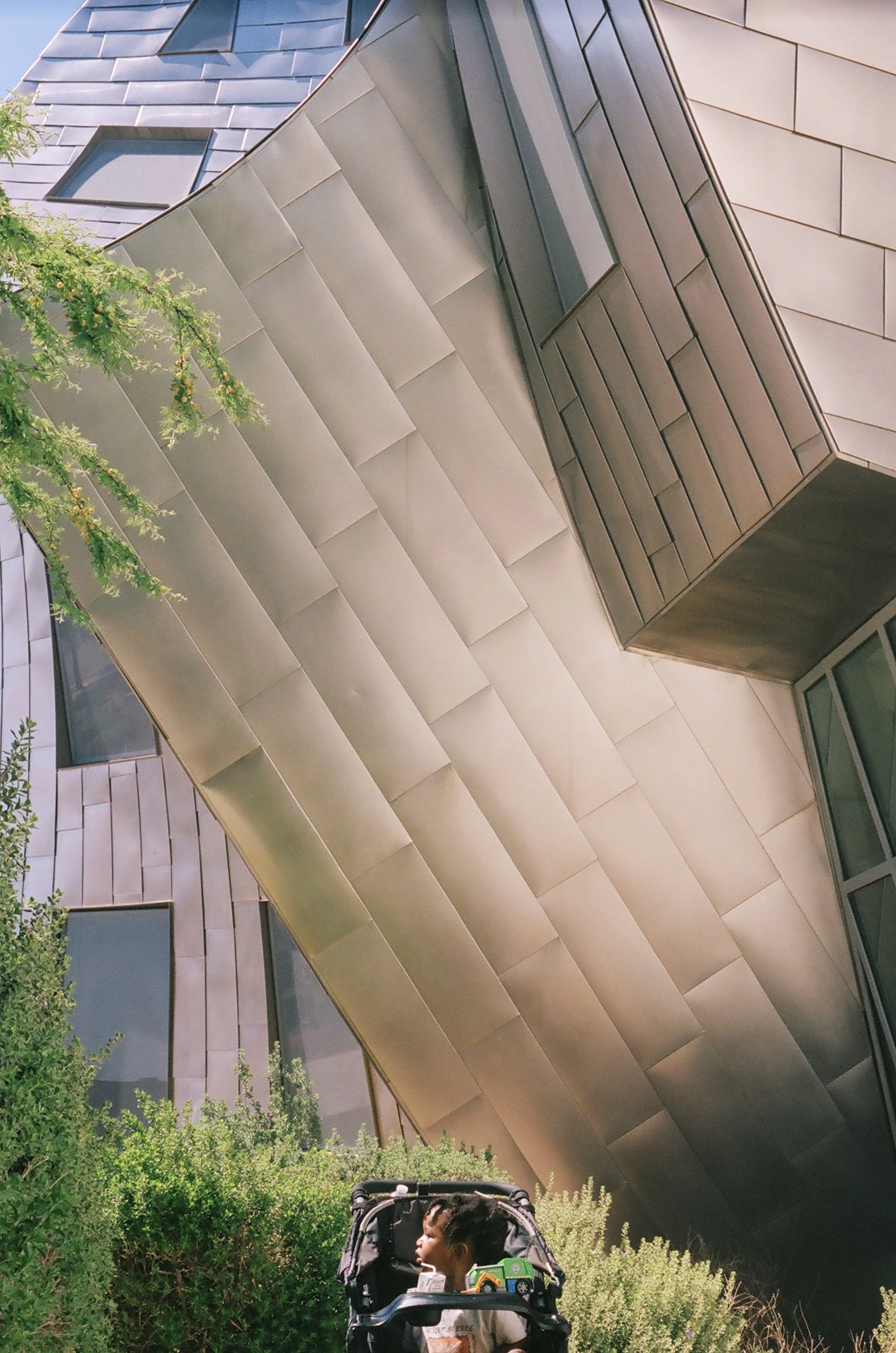
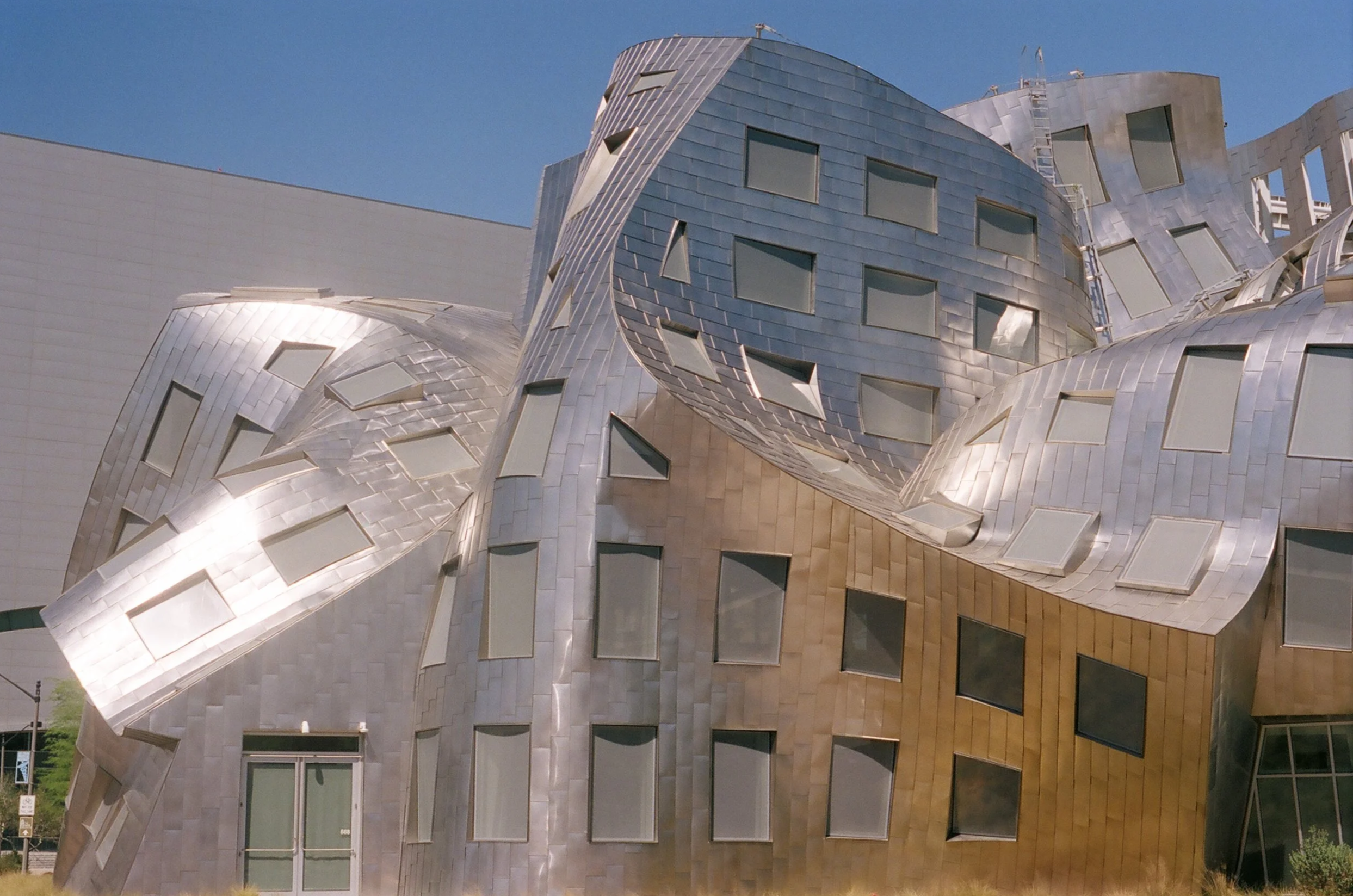
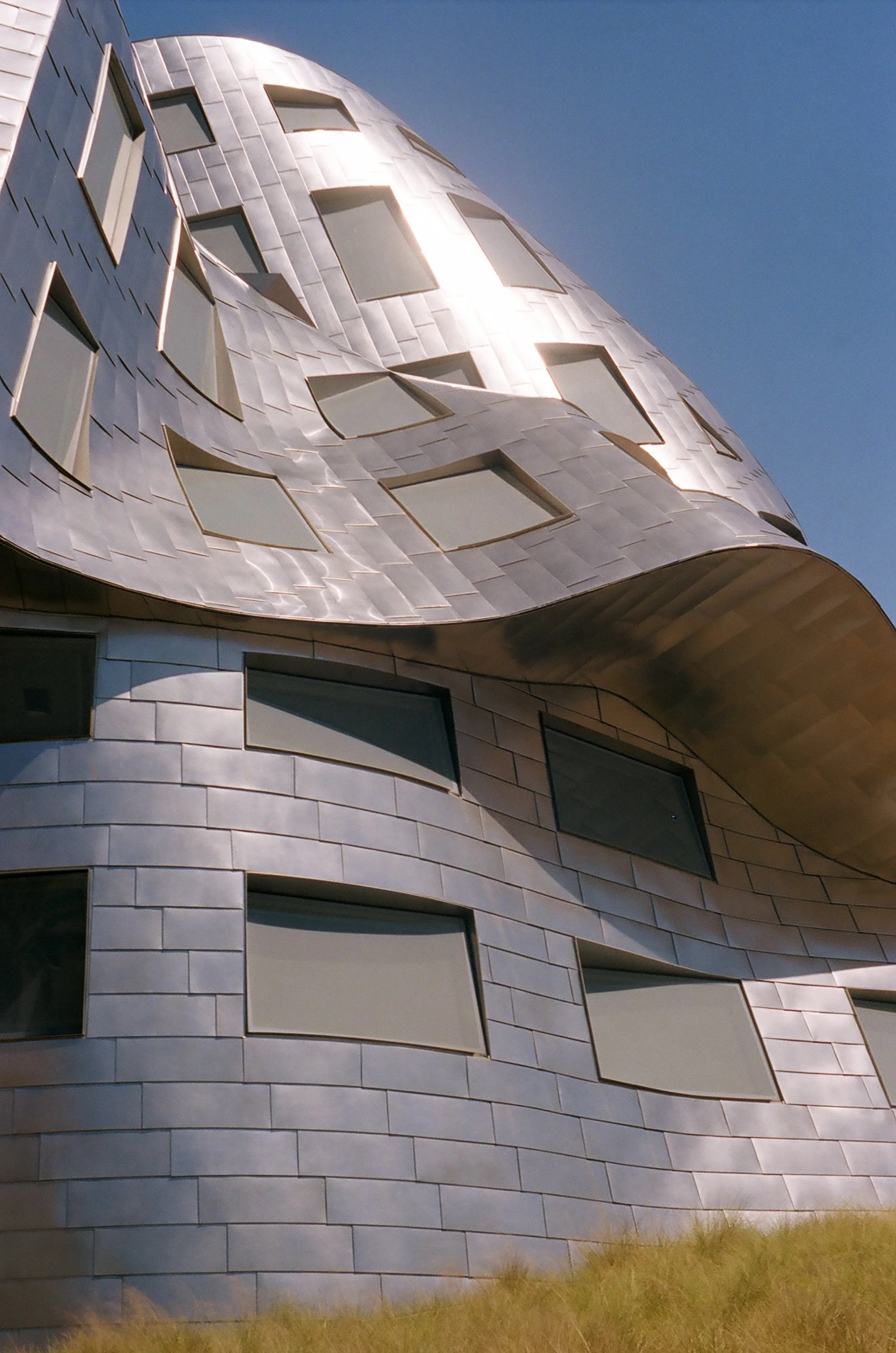
Lou Ruvo Center for Brain Health — Las Vegas, NV. Frank Gehry. Kodak Portra 400, 35mm.
There are certain places that stay with you long before you ever step inside them. For years, I had been drawn to this building — passing by, observing it from a distance, noticing its form against the Las Vegas sky. It always felt distinct. Intentional. Almost alive in the way it held light. It was one of those structures you file somewhere in your awareness, a landmark you register without yet understanding, a presence that asks to be returned to.
I had passed it many times. I had looked at it from the car, from the sidewalk, from the peripheral awareness of someone who lives in the same city as a thing without yet really meeting it. That kind of looking is not the same as seeing. I know the difference now.
But this time was different. This time, I didn't just look at it. I experienced it. Up close. In stillness. With my son beside me, resting in his stroller. With my camera in hand. With nowhere else to be.
The metal shifted with the light in a way I hadn't fully noticed before — silver softening into gold, surfaces warming as the day moved. Every panel felt considered. Every curve deliberate. There was a quiet precision to it, something both structured and fluid at once. Gehry's architecture does something unusual: it performs without performing. It moves without moving. The building is kinetic and still at the same time, and standing inside that contradiction is an experience that resists summary.
"What struck me most wasn't just the architecture itself, but the way it invited me to slow down. To notice. To take time. To be present in a way that felt grounding, almost therapeutic."
Lately, documenting like this — moving slowly, observing closely, allowing a space to unfold at its own pace — has become a practice. A return to myself. A way of integrating all the parts of my life that matter most: motherhood, creativity, design, stillness. The camera is not just a tool for capturing what I see. It is the discipline through which I learn how to see at all.
Azulu was in his stroller, drifting between sleep and wakefulness the way small children do when the world is moving gently around them. He didn't know where we were. He didn't need to. What he knew was that we were together, that the air was warm, and that his mother was paying very close attention to something. Children understand attention even when they can't name it.
And in that moment, standing there with my son, I realized how much more meaningful these experiences become when they are shared this way. Not rushed. Not forced. Just lived. Las Vegas met me differently that day. And I met it differently, too.
Casa Gilardi — A Study in Light, Color, and Stillness
On Luis Barragán's masterwork, the spaces that ask you to slow down, and what it means to move through beauty with a child at your side
Tatiana Donaldson · Mexico City, 2026
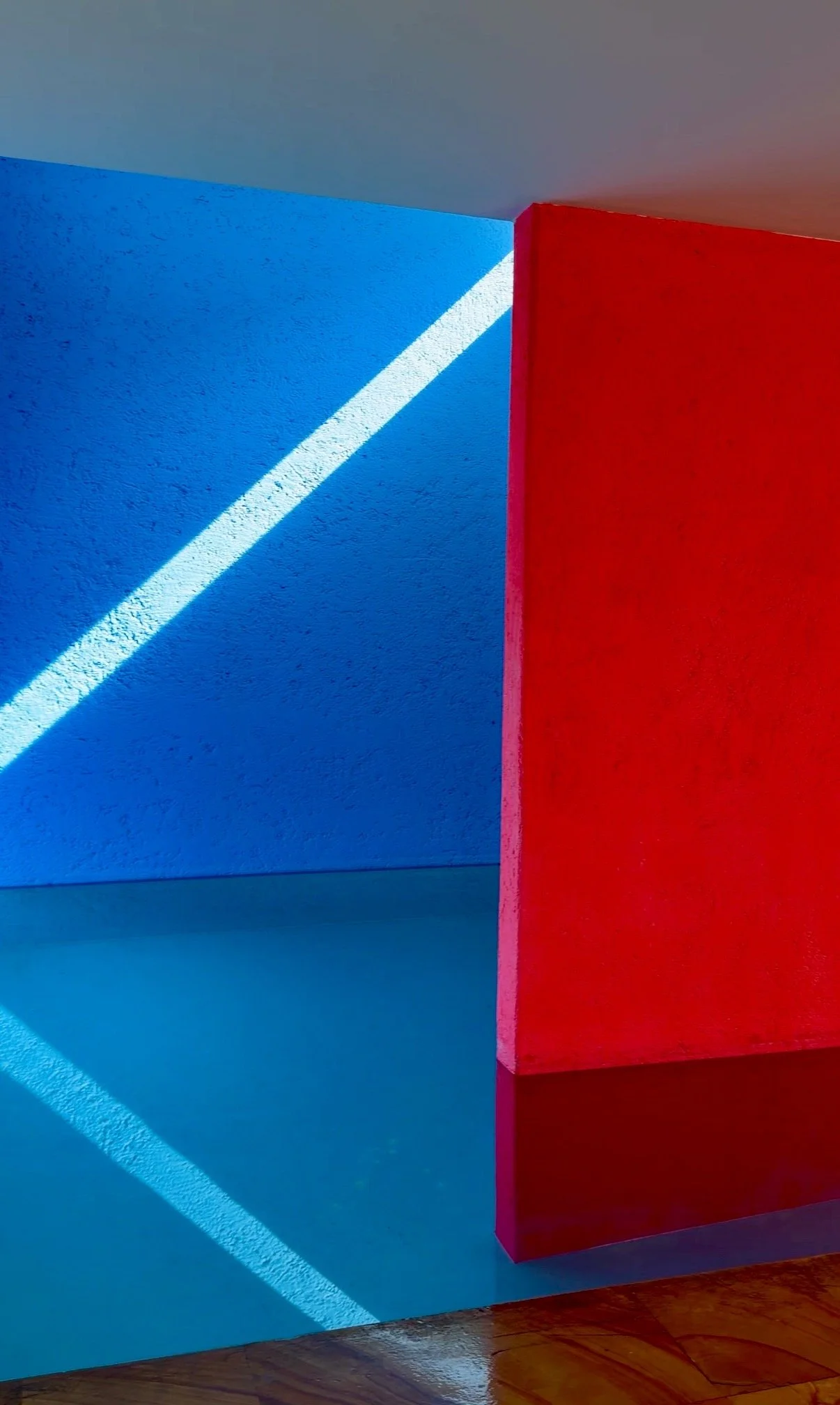
Casa Gilardi — Mexico City. Designed by Luis Barragán, 1976.
There are spaces that ask you to slow down. Not politely — with the kind of quiet insistence that makes you realize, slowly, that you have been moving too fast through everything. Casa Gilardi is one of those spaces. Designed by Mexican architect Luis Barragán and completed in 1976, it is a meditation on color, light, and form. Each wall, each corridor, each shadow feels intentional — less about utility, more about atmosphere. The house does not rush to reveal itself. It invites pause.
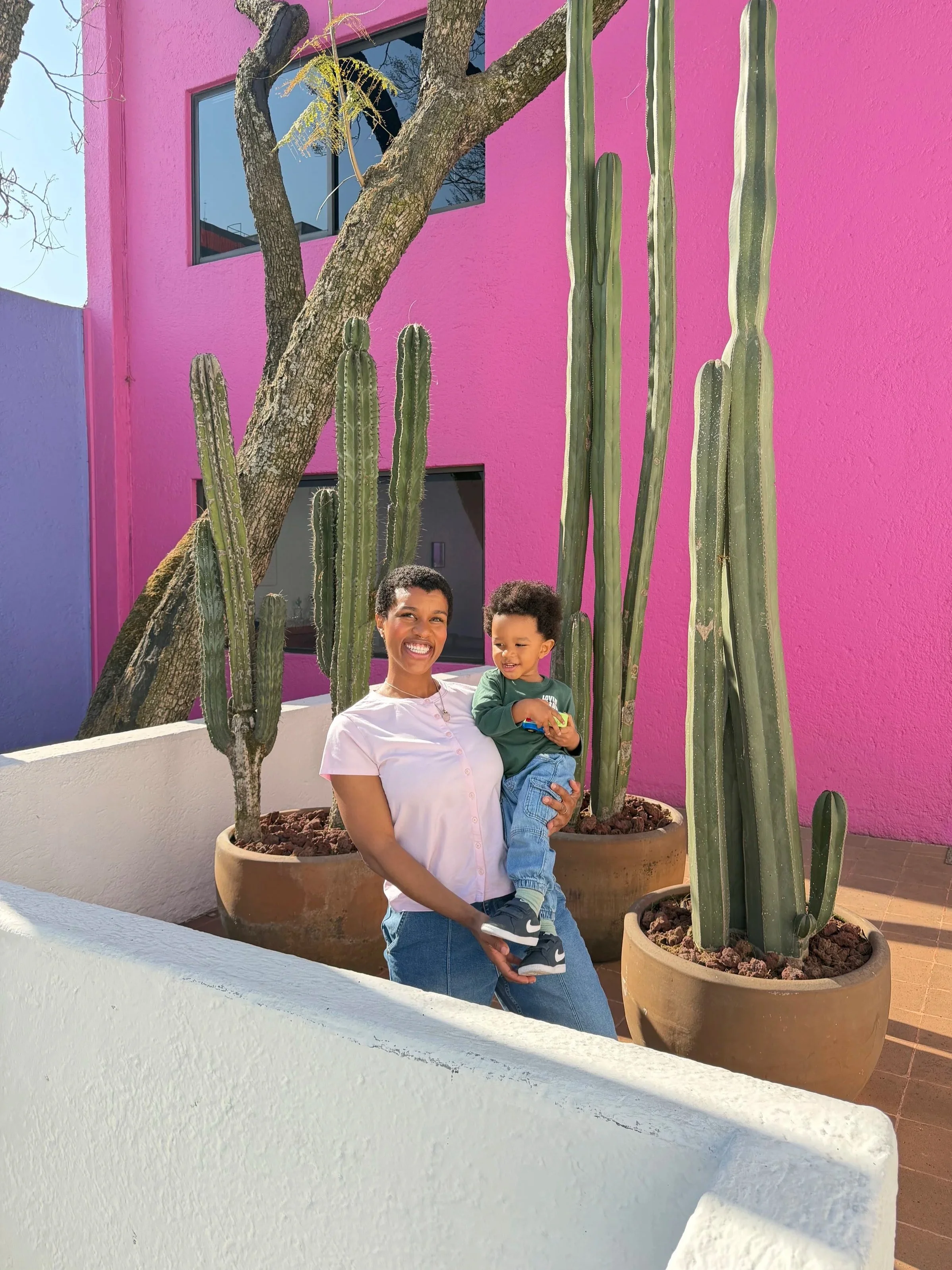
I arrived with Azulu in the morning. The tour began in soft light, and I remember how vivid everything felt — the colors saturated and warm, the cactus sharp against walls that seemed to hold heat even before the day had fully arrived. Barragán understood something about color that most architects never learn: it is not decoration. It is structure. The yellow corridor at Casa Gilardi doesn't just look beautiful. It changes the quality of your attention. You slow down inside it without being asked to.
Walking through the space, I became more aware of presence — of light moving across the walls, of color carrying emotion, of the way a room can shift the quality of your breathing without you noticing until you're already different. That is what architecture at this level does. It operates on you. You don't observe it. You are changed by it.
Watching Azulu move through it added another layer of meaning. The house held warmth, geometry, and hush all at once. Children, I've found, respond to well-designed space with an honesty that adults have learned to suppress. He moved freely. He peeked around corners. He climbed steps and descended them again, proud of himself in the way two-year-olds are proud — completely, without performance. The house received him. That felt significant.
"Spaces like this remind me that beauty is not extra. It shapes how we feel. How we move. How we remember."
There are buildings you visit and buildings you absorb. Casa Gilardi is the latter. I left with more questions than I arrived with — about how space shapes identity, about what it means to design a home as an act of philosophy, about what Barragán understood about stillness that he translated into wall and light and corridor. Those questions are still with me. I think that is the point.
Some seasons of motherhood feel loud. This one felt luminous — on beauty after grief, and what it means to mother while becoming
Tatiana Donaldson · Mexico City, 2026
Casa Gilardi, Mexico City. 2026.
Some seasons of motherhood feel loud. This one felt luminous. At Casa Gilardi, surrounded by vivid color, warm morning light, and the quiet energy of a space so intentionally designed, I found myself holding more than a moment. I was holding my son, holding my presence, and holding the quiet recognition that we were really here. Just days before, we had been home. Then San Antonio. Then Mexico City. And now here we were, standing inside one of the city's most iconic architectural spaces, moving through it together.
There was something especially tender about experiencing a place like Casa Gilardi as a mother. The tour began in the morning, and I remember how bright everything felt. The light was vivid against the walls, the cactus, even our skin. I could feel the warmth of the day already gathering. The space felt alive, and so did I. I also remember feeling seen — not in the way of being watched, but in the way of being recognized. We were part of an intimate tour, and there was something quietly affirming about being there with my son, fully present, fully committed to mothering, and still allowing myself to be fully immersed in beauty.
"He was the only child there. The only little one moving through the space with curiosity and ease. And I was doing what motherhood so often asks of me: staying aware, staying soft, staying present — while also allowing myself to receive the moment."
Azulu moved through Casa Gilardi the way children move through the world when they feel free — peeking around corners, climbing up and down steps, holding his little truck, giggling, exploring, proud of himself. And I moved with him. Watching him in that space made me even more aware of how motherhood has changed the way I experience place. It has made me more attentive. More aware of movement, scale, pace, softness, and wonder. What could have been a simple outing became something fuller: design, travel, emotion, grief, beauty, and motherhood all existing in the same frame.
This season felt luminous because it held beauty after grief. It held presence after so much emotional weight. It held proof that life was still happening — and not only was it still happening, but we were inside it. Living it. Choosing it. To be in Mexico City with my son, intentionally moving through spaces that inspired me, reminded me that motherhood does not end my relationship with beauty, design, discovery, or wonder. It deepens it. It slows me down enough to notice. Enough to appreciate the life unfolding in real time. Enough to recognize when visualization has quietly become actualization.
Motherhood, for me, is not separate from beauty. It has made me more available to it. To move through the world with my son is to witness life on two levels at once — through my own eyes, and again through his. And in places like this, I'm reminded that motherhood in motion is not only labor. It is art, presence, tenderness, and becoming.
On the apartment in Mexico City where Azulu and I lived briefly, the alignment you feel when a space receives you, and what it means to be genuinely at home somewhere you've just arrived
Tatiana Donaldson · La Condesa, Mexico City · Shot on 35mm film + iPhone 17 Pro
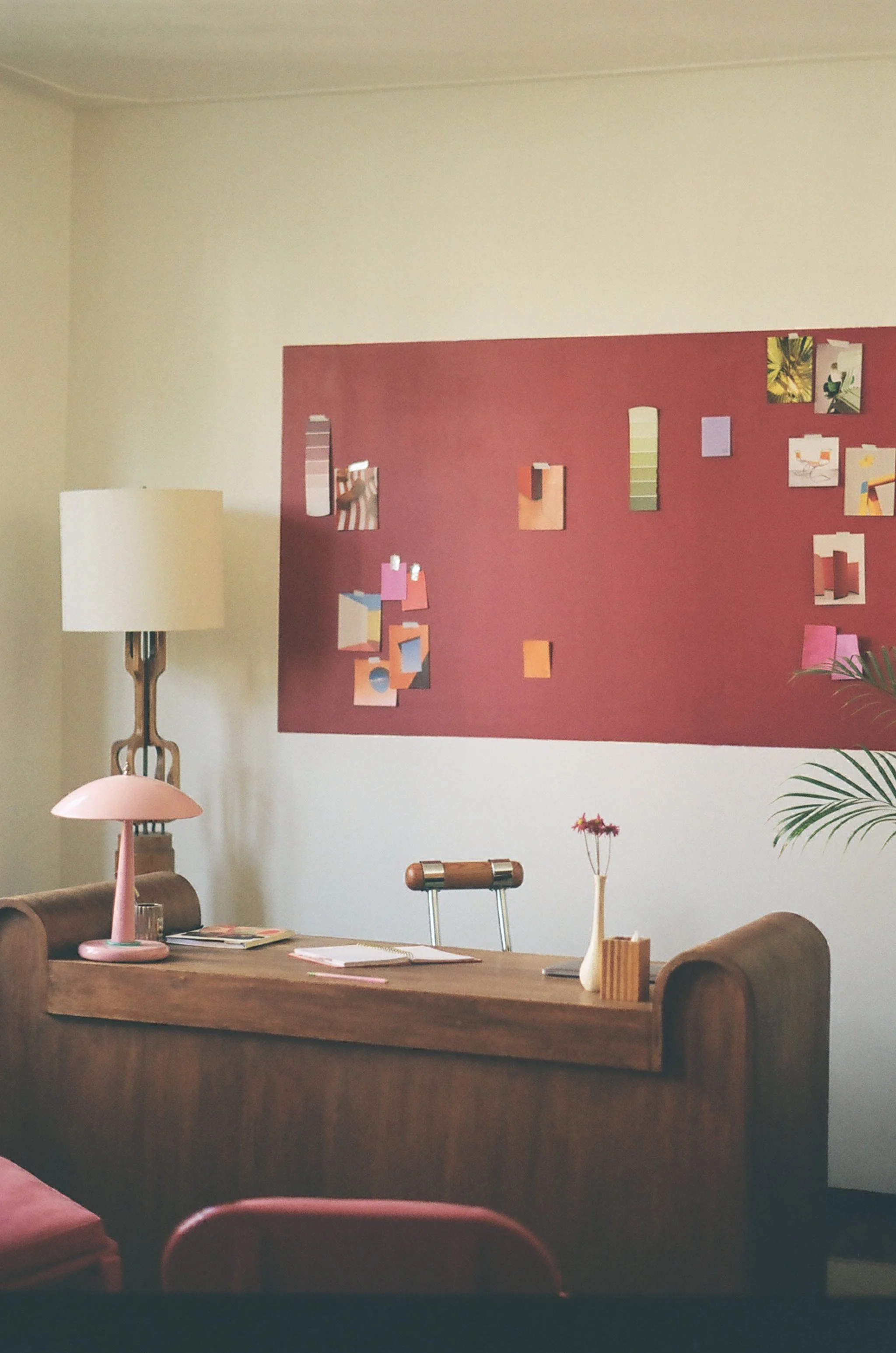
La Condesa, Mexico City. 35mm film.
When my son and I stepped into the apartment for the first time, I felt an immediate sense of alignment. There are certain spaces that simply feel good the moment you enter them — not because they are beautiful in a studied way, but because something in them corresponds to something in you. This was one of those spaces. I remember feeling it before I could name it: a recognition, a quiet yes.
The first things that caught my attention were the color and the light. Warm tones moved through the apartment in a way that felt both vibrant and grounding, while the natural light poured in throughout the day. It was the kind of light that changes with the hours — soft and golden in the morning, direct and clear by afternoon, blue and low by evening. Azulu and I oriented ourselves to it without trying. The space was teaching us how to be inside it.
The openness of the layout, the architecture, and the carefully selected furniture all came together to create a home that felt intentional and inspiring. It was the kind of place that made me think quietly to myself: I could live here. I could create here. That thought — the desire not just to visit a space but to inhabit it, to belong to it — is the highest thing I can say about a room.
I brought my Minolta SRT-101 to Mexico City with several rolls of film, expecting to document the city. I did. But unexpectedly, the apartment itself became one of my favorite subjects. The way the light moved through the rooms, the textures of the walls, the thoughtful design details — small corners of the apartment felt like scenes waiting to be captured. A chair near the window. A wall catching afternoon light. The quiet simplicity of the living space at rest. I photographed details on 35mm film, allowing the space to become part of the visual story of our time in the city.
As a mother traveling with my son, having a space that felt both comfortable and inspiring made our experience more meaningful than I had anticipated. Days in Mexico City were filled with exploring — neighborhoods, cafés, parks, the creative rhythm of the city. Returning to the apartment each evening felt peaceful and grounding. It wasn't simply a place to sleep. It became part of our experience of the city, a home base that held us while we moved through everything else.
"Some places we visit simply become part of our travel memories. Others leave a deeper impression because of how they make us feel while we are there. This apartment was one of those places."
La Condesa is one of Mexico City's most walkable and culturally rich neighborhoods — tree-lined streets, independent cafés, small boutiques, local parks. Mornings often began with quiet walks. Afternoons and evenings were spent exploring Roma Norte and beyond. The apartment's location made it easy to experience the city fully while still having somewhere peaceful to return to. That combination — access and refuge — is harder to find than people acknowledge. When you have it, you feel it.
La Condesa, Mexico City. Filled with color, thoughtful design, and beautiful natural light.